
 English (UK)
  Türkçe
  العربية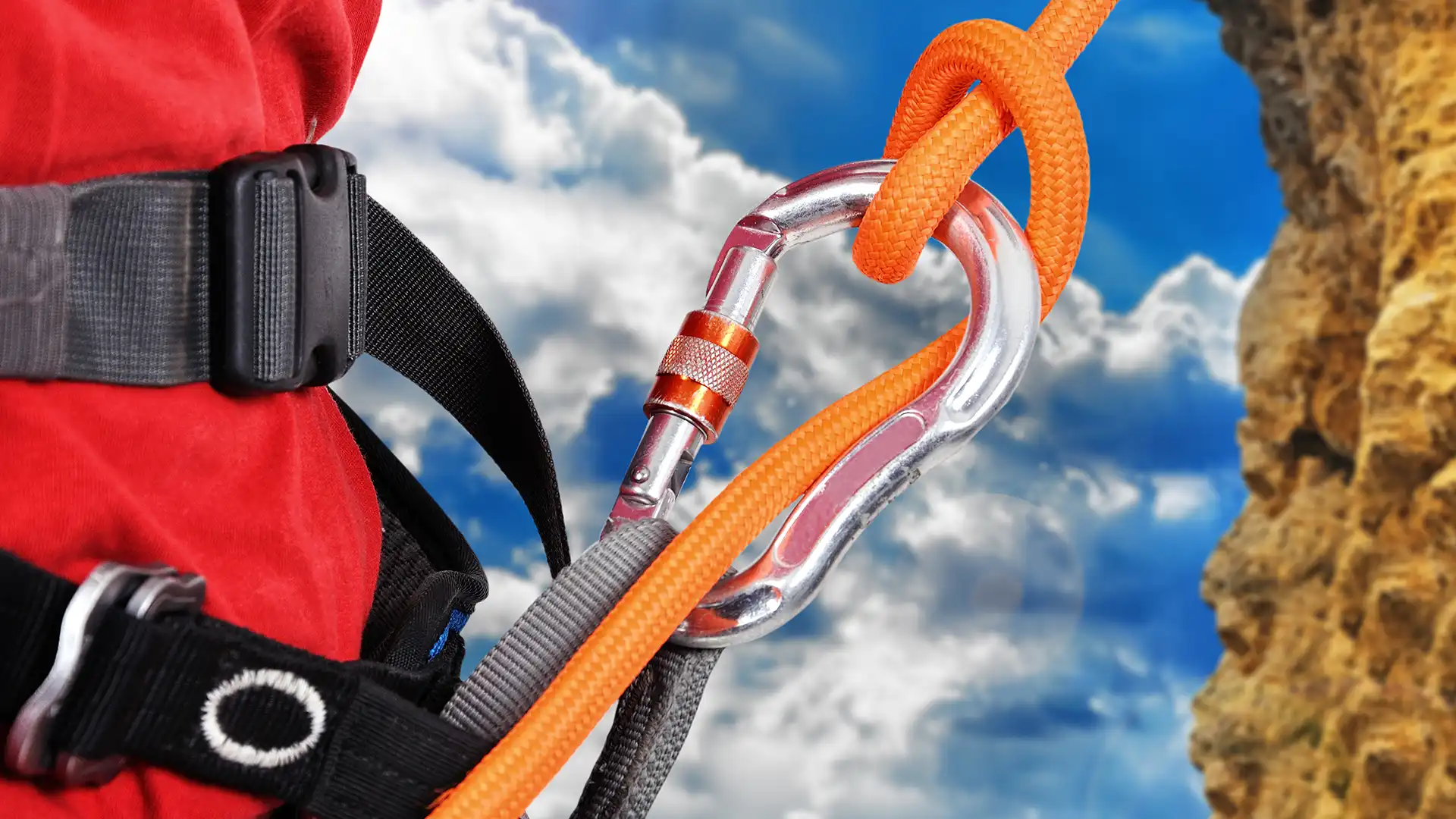
A carabiner is one of the most critical components of work safety equipment used in high-altitude operations. Carabiners developed by EKS Work Safety not only serve as a connection point but also directly protect workers’ safety when used correctly, preventing serious accidents. Equipment safety during work at height is vital for protecting lives, and the carabiner is a fundamental link in this safety chain. The design of a carabiner prioritizes material quality, locking systems, and durability. Each carabiner is engineered and tested to provide maximum safety under various working conditions.
A carabiner is more than just a connection tool—it is a guarantee of safety when working at height. Proper carabiner use minimizes the risk of falling while securely anchoring equipment. EKS Work Safety’s carabiners are manufactured to meet international standards, using high-quality materials to ensure long-lasting performance.
How a Carabiner Works
The effectiveness of a carabiner in ensuring safety is directly tied to its working mechanism. The spring mechanism and locking system allow the carabiner to open and close securely. Screw-lock carabiners are manually secured, making them ideal for applications requiring extra safety. Automatic-locking carabiners provide quick and secure connections through their opening mechanism. Triple-lock systems are preferred for maximum security.
Each carabiner is designed based on its load-bearing capacity. Users must ensure the locking system is correctly engaged and that connection points are secure. Proper use of the locking mechanism plays a critical role in preventing accidents.
Applications of Carabiners
Carabiners are vital across multiple industries:
- Construction Industry: Workers use carabiners to connect to anchors, creating a safe working environment in high areas.
- Energy Sector: During work on poles or towers, carabiners securely hold equipment in place.
- Climbing and Training: In sports and training activities, carabiners provide both safety and ease of movement.
EKS Work Safety’s carabiners are offered in models tailored to the needs of various industries. Each design is crafted with durability and safety standards in mind to suit specific work environments.
Key Considerations for Choosing a Carabiner
Selecting the right carabiner is critical for ensuring worker safety and equipment functionality during work at height. Understanding key considerations helps prevent accidents and enhances work efficiency:
- Material: Aluminum carabiners are lightweight, while steel carabiners are suitable for conditions requiring high durability.
- Locking System: Screw-lock, automatic, or triple-lock systems are designed for different use cases.
- Load Capacity: Each carabiner has a specific load limit. EKS Work Safety’s carabiners undergo rigorous durability tests.
- Gate Opening: A wider gate opening enhances compatibility with various equipment.
Choosing the correct carabiner enhances safety and prevents accidents. An incorrect choice can pose risks to both equipment and users.
Risks of Improper Carabiner Use
Improper carabiner use not only jeopardizes equipment safety but also increases the risk of falls, potentially leading to serious injuries or even fatalities. Therefore, selecting and using a carabiner correctly is of utmost importance.
- Incorrect Locking: Failure to fully close the locking mechanism can cause the connection to fail.
- Overloading: Exceeding the carabiner’s load limit can lead to material deformation or breakage.
- Inappropriate Material Use: Using an aluminum carabiner under excessive load can create significant safety risks.
- Improper Connection Points: Unsuitable anchors increase the risk of falling.
EKS Work Safety provides training and usage guides to ensure the safe use of carabiners. User training is critical for preventing potential accidents.
Safety and Maintenance Tips for Carabiners
While a carabiner is a fundamental safety component in high-altitude work, selecting a high-quality product is not enough. Proper use and regular maintenance are essential to maintain performance and prevent accidents. Key safety and maintenance steps include:
- Regular Inspections: The locking mechanism and overall condition of the carabiner should be frequently checked.
- Training: Users should receive proper training on carabiner use and maintenance.
- Avoid Overloading: The carabiner’s load capacity must not be exceeded.
- Maintenance: Dirty or deformed carabiners should be replaced immediately.
EKS Work Safety designs all carabiners with durability, safety, and ease of use in mind. Each model is built for long-lasting, secure performance. Proper carabiner use is the foundation of safe work at height.
Don’t Leave Your Safety to Chance
Despite its small size, a carabiner serves a critical purpose: keeping you safe. Incorrect selection, inadequate maintenance, or improper use can lead to irreversible consequences. A carabiner is not just a connection tool—it is a vital safety component that directly protects workers’ lives.
Your carabiner’s reliability and correct use safeguard your life at every step. If you want to work with reliable connections in challenging conditions, feel free to contact us.
You can visit our LinkedIn page for more.

 by
by