
 English (UK)
  Türkçe
  العربية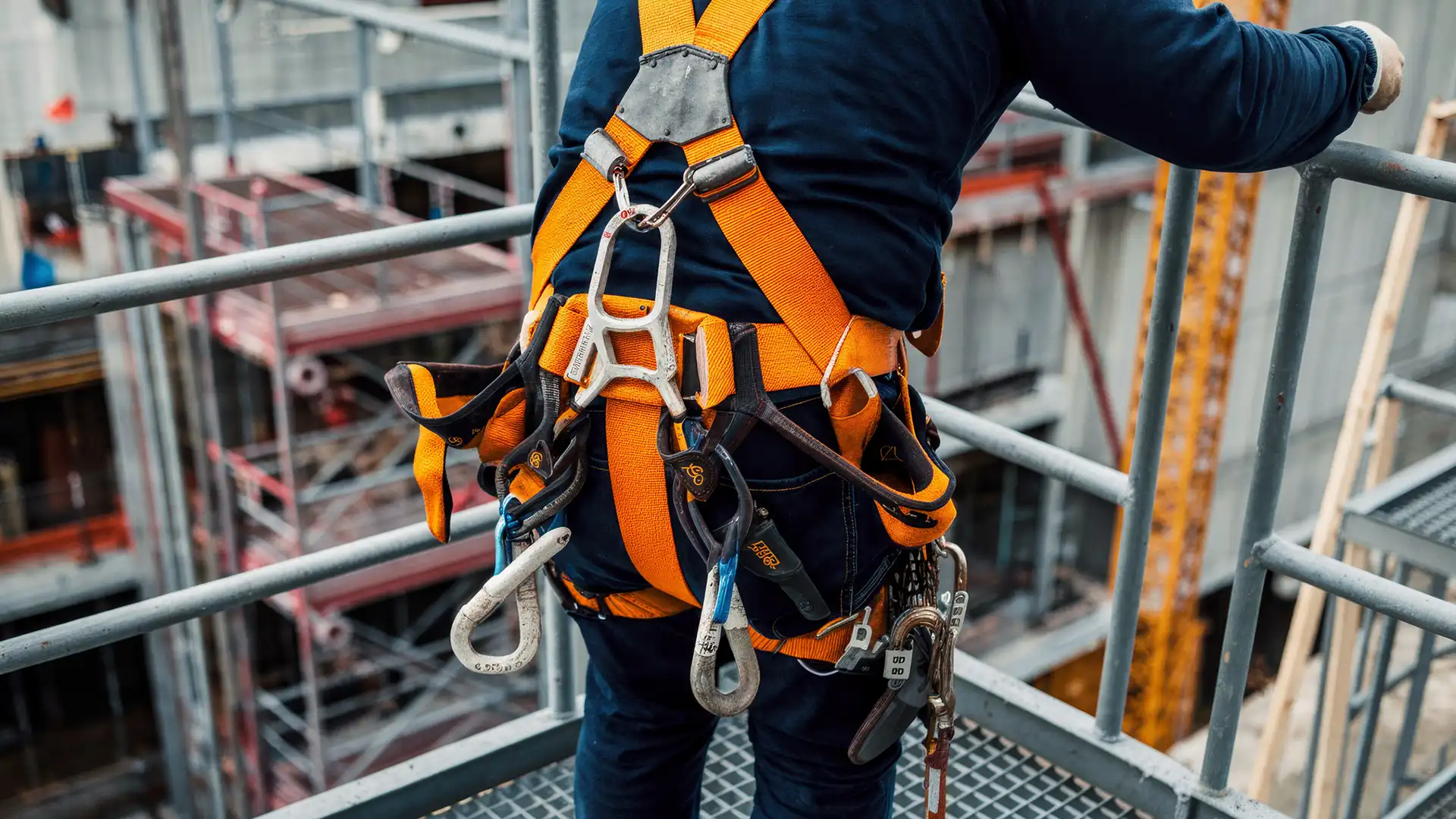
One of the most common questions in work-at-height safety is whether lanyard systems are sufficient under all conditions. In many sites, basic connection structures consisting of a lanyard, harness, and carabiner are commonly preferred. However, as working conditions change, the limitations of these systems become more clearly visible.
At this point, a retractable fall arrest becomes not just an alternative, but a mandatory safety component in certain scenarios.
What Type of Protection Do Lanyard Systems Provide?
A lanyard is a fundamental component that connects the worker’s harness to an anchor point. When selected correctly and used under suitable conditions, it helps limit fall risk. However, the level of protection provided by lanyard systems is directly dependent on the usage scenario.
In general, lanyard systems are effective when:
- Working in fixed or semi-fixed areas,
- The user’s range of movement is limited,
- Free fall distance is low.
In these systems, safety is primarily ensured through the correct combination of harness, carabiner, and anchor.
At What Point Does a Lanyard Become Insufficient?
As the worksite becomes more dynamic, traditional lanyard solutions may introduce additional risks. Especially in tasks that require frequent movement, lanyard systems may fail to respond as expected at the moment of a fall.
Situations where lanyard use becomes insufficient include:
- Sites requiring constant repositioning,
- Tasks involving transitions between anchor points,
- Areas where free fall distance may increase,
- Applications with frequent sudden acceleration and direction changes.
In these scenarios, rope slack within the system can extend the fall distance and increase risk.
Is an Energy Absorbing Lanyard Enough?
At this stage, energy absorbing lanyards are often preferred. The energy absorber mechanism reduces the force transmitted to the body by dissipating the energy generated during a fall. However, an energy absorbing lanyard is not sufficient in every situation.
An energy absorbing lanyard:
- Provides energy absorption,
- Softens the stopping motion,
- Balances the load applied to the harness.
Nevertheless, in scenarios requiring an immediate stop within a very short distance, the deployment length of the energy absorber may become a disadvantage. This is especially critical in areas where obstacles exist at lower levels.
When Does a Retractable Fall Arrest Become Necessary?
This is exactly where the retractable fall arrest comes into play. The system adapts to the user’s movement and locks within milliseconds when a sudden fall is detected.
Retractable fall arrests are particularly necessary in:
- Dynamic and mobile working environments,
- Platform, scaffold, and tower operations,
- Sites using horizontal lifelines,
- Areas where free fall distance must be kept to a minimum.
Within fall arrest systems, these devices are among the fastest-responding solutions.
Where Does the Fundamental Difference Between the Systems Begin?
The difference between a lanyard and a retractable fall arrest becomes clear at the moment of a fall.
Comparatively:
- A lanyard provides a fixed-length connection.
- An energy absorbing lanyard dissipates energy but requires deployment distance.
- A retractable fall arrest creates no rope slack and stops the fall within a very short distance.
This distinction is critical, particularly in determining where and how the fall is arrested.
Why Is Harness and Carabiner Compatibility Important?
Regardless of which system is chosen, safety fundamentally depends on selecting the correct harness and reliable carabiner. Retractable fall arrests, lanyards, and energy absorbing lanyards all operate together with these two components.
Key points to consider:
- The locking mechanism of the carabiner must be reliable,
- The harness must be a full body harness designed for fall arrest,
- System components must work in full compatibility.
Incompatible equipment can reduce the effectiveness of even the most advanced fall arrest systems.
Which System Should Be Preferred in Which Scenario?
No single system is sufficient for every worksite. The correct choice depends on the working method and risk assessment.
- Fixed and low-risk areas: Lanyard
- Situations requiring energy absorption: Energy absorbing lanyard
- Mobile and high-risk environments: Retractable fall arrest
This approach ensures the correct balance within fall arrest systems.
Controlled Stopping, Sustainable Safety
Work-at-height safety is achieved not merely by using equipment, but by using the right equipment in the right place. Lanyards, energy absorbing lanyards, and retractable fall arrests are not alternatives to one another; they are solution components for different scenarios.
To identify the most suitable fall arrest systems for your worksite, ensure proper harness and carabiner compatibility, and keep safety under control, you can contact us.
Visit our LinkedIn page to learn more.

 by
by