
 English (UK)
  Türkçe
  العربية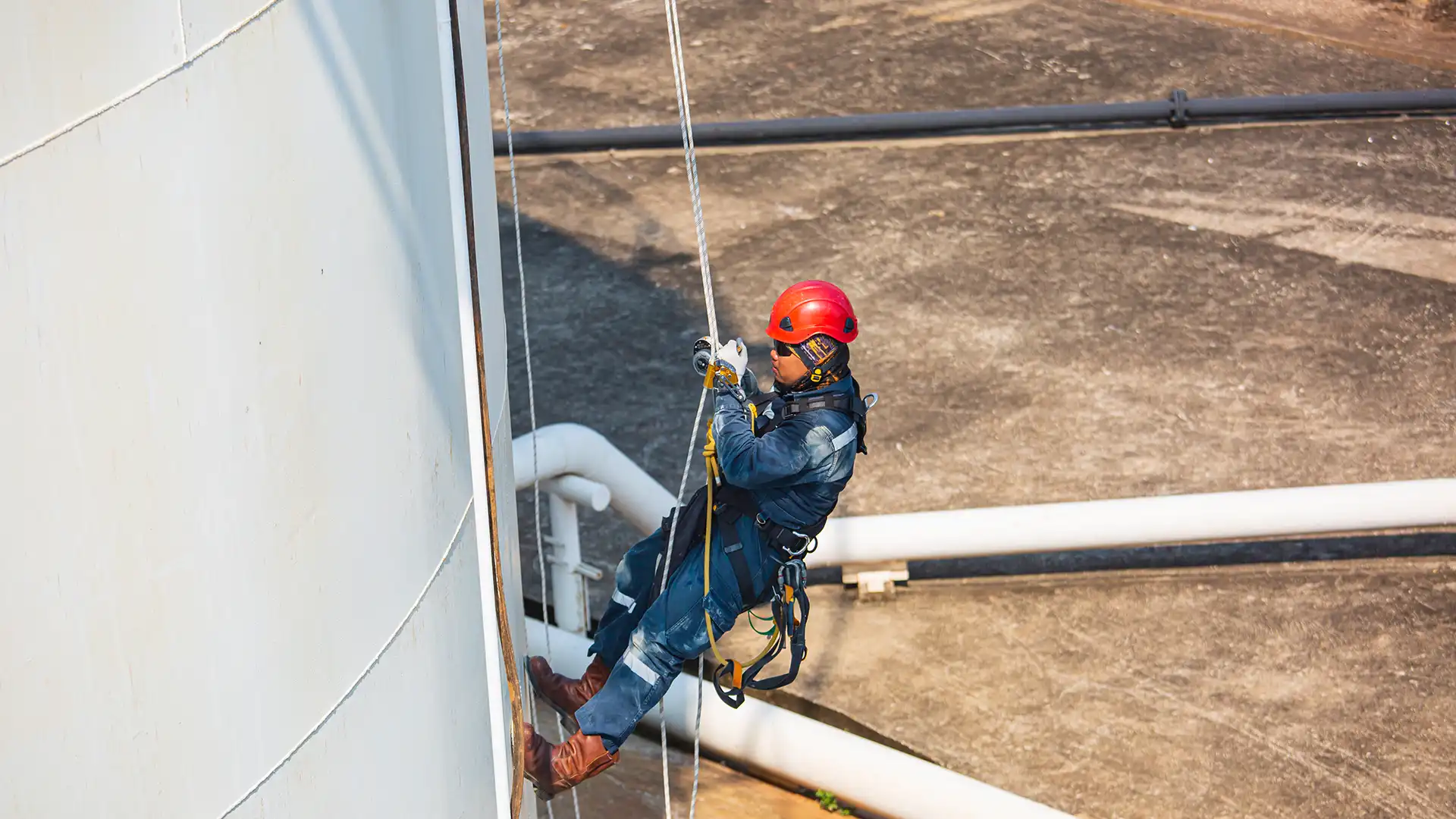
Work at height training is a legally mandatory training program for personnel working in jobs with a risk of falling from height, so that they recognize the hazards, correctly use personal protective equipment, and learn safe working methods. Under Occupational Health and Safety Law No. 6331 and the related regulations, workers in all sectors carrying a fall risk — such as construction, energy, telecommunications, maintenance-repair, and cleaning — are required to take this training. The certificate issued at the end of the training is generally valid for 2 years and must be renewed at the end of this period; otherwise, an administrative fine may be imposed on the employer.
Why Is Work at Height Training Mandatory?
Falling from height is one of the leading causes of fatal occupational accidents in the construction and industrial sectors. A large part of these accidents result from the incorrect use of the right equipment or the failure to correctly assess the risk. Training closes exactly this gap: even the highest-quality harness does not provide protection in the hands of a worker who does not know how to put it on correctly and attach it to the correct anchor.
For this reason, legislation does not consider providing equipment sufficient on its own; it also requires the worker to have the knowledge and competence to use that equipment safely. Work at height training is the documented form of this competence.
Which Law Is Work at Height Training Based On?
In Türkiye, work at height training is based on several complementary regulations:
- Occupational Health and Safety Law No. 6331: The framework law for all occupational health and safety obligations, making it mandatory to provide training to workers.
- Regulation on the Procedures and Principles of Occupational Health and Safety Training of Employees: Regulates how, with what content, and by whom the training will be provided.
- Regulation on Occupational Health and Safety in Construction Works: Contains the technical requirements and supervision conditions for work at height.
Together, these regulations make work at height training a legal obligation that the employer must fulfill. The cost of the training cannot be passed on to the worker.
Who Is Required to Take Work at Height Training?
The short answer: everyone working in any job with a risk of falling. Whether working on a fixed scaffold, temporary platform, roof, tower, or pole, it does not matter; if there is a difference in level and a risk of falling, training is mandatory. It is especially critical in the following sectors:
- Construction and building works
- Energy (power transmission lines, substations, wind farms)
- Telecommunications (base stations, antenna towers)
- Maintenance-repair and industrial cleaning
- Rope access (facade, high structure) work
For participation in the training, literacy, physical suitability to do the job, and the absence of a preventive health problem such as fear of heights/vertigo are generally required.
The Content and Duration of Work at Height Training
The training consists of two parts, theoretical and practical, and generally lasts at least 8 hours (1 day); in high-risk areas such as energy or telecommunications, this duration may be longer.
The theoretical part generally covers: the relevant legislation, risk assessment, employer and worker responsibilities, fall dynamics, and the protection hierarchy. In the practical part, topics such as putting on a harness, using lanyards and anchors, correctly setting up fall arrest systems, and basic rescue knowledge are demonstrated in the field.
At the end of the training, a theoretical and practical assessment is generally carried out; a certificate is issued to successful participants.
How Many Years Is the Certificate Valid?
The certificate issued at the end of work at height training is generally valid for 2 years. At the end of this period, the training must be renewed. The reason for renewal is not merely a formality: equipment and methods evolve, knowledge can be forgotten over time, and it must be confirmed that the worker’s physical/mental suitability continues.
In addition, even if the certificate has not expired, it is recommended that the training be repeated in cases such as a change in the worker’s duties, a change in the equipment used, or a long absence from work. Working at height with an expired certificate is not legal and creates a risk of administrative sanction for the employer.
What Does “Competent Person” Supervision Mean?
Legislation requires that work carried out at height be conducted under the supervision and control of a competent (qualified and experienced) person appointed by the employer. Training makes the worker competent; competent person supervision guarantees that this competence is correctly applied in the field.
In addition, especially in dangerous work, a work permit system (work at height permit form) is applied: before starting work, risks are assessed, measures are checked, and approval is given by authorized persons. Training, supervision, and work permit together form the human dimension of safety.
Frequently Asked Questions
How many hours does work at height training last?
The training generally lasts at least 8 hours (1 day) and consists of theoretical and practical parts. In high-risk sectors such as energy and telecommunications, this duration may be longer.
How long is the certificate valid?
A work at height certificate is generally valid for 2 years. At the end of this period, the training must be renewed; working with an expired certificate is not legal.
Does the worker pay for the training?
No. The cost of occupational health and safety training cannot be passed on to the worker; the training is provided by the employer.
Can one work at height without training?
No. In jobs with a risk of falling, training is a legal requirement. Employing someone without training creates a risk of an administrative fine and heavy liability for the employer.
Safety Is Completed with the Right Equipment and the Right Knowledge
Work at height training is the human dimension of safety, as critical as the equipment. A correctly chosen harness or lifeline provides real protection only in the hands of a trained worker who knows how to use it correctly. This is why training, supervision, and work permit form a whole together with the right equipment.
EKS Work Safety, emphasizing the importance of correct use alongside the right equipment, provides work at height solutions within a unified system. For standards-compliant equipment selection suited to your site, you can contact EKS Work Safety.
Visit our LinkedIn page to learn more.

 by
by