
 English (UK)
  Türkçe
  العربية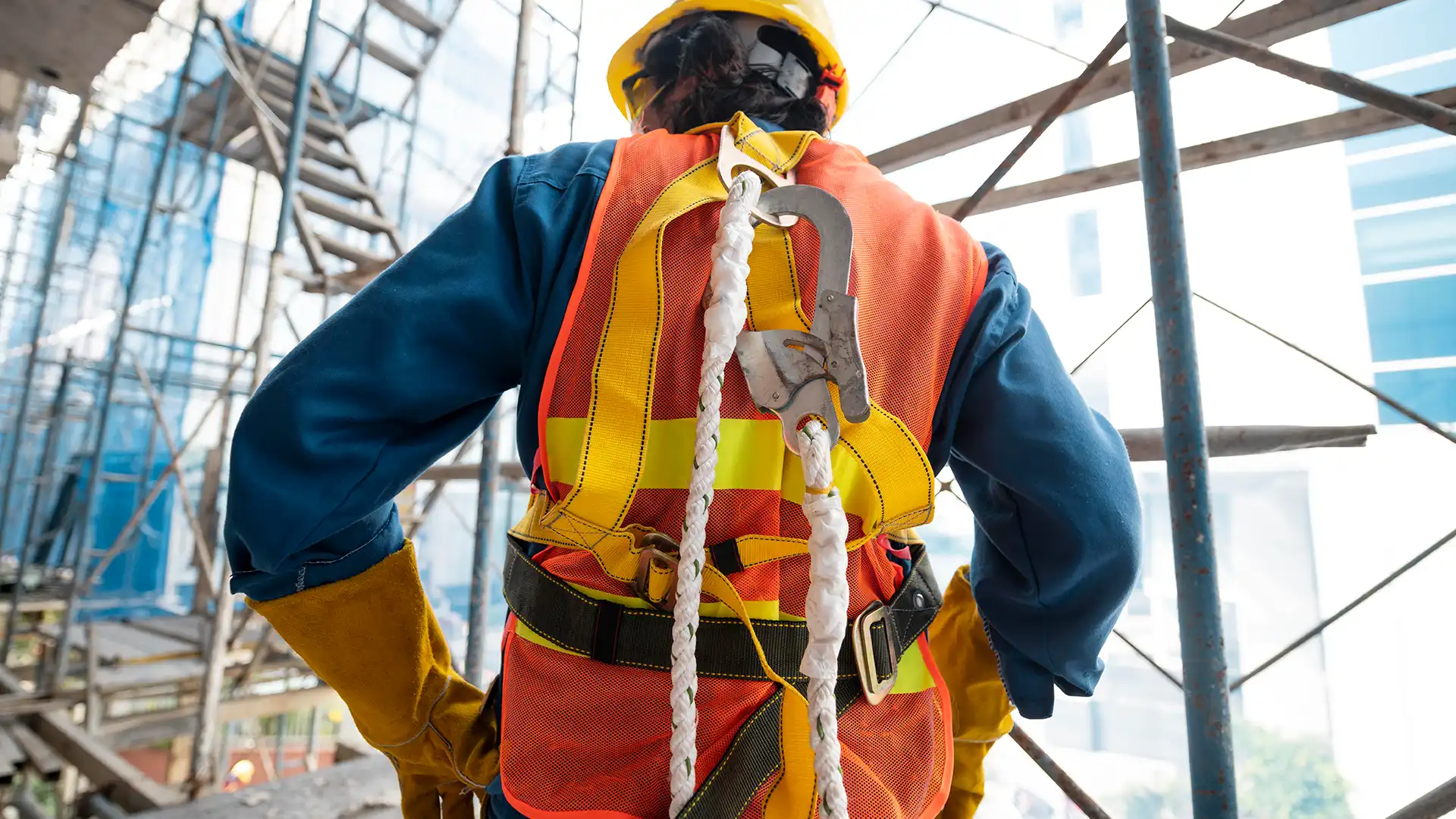
In every worksite where working at height is required, choosing the right equipment is not just about comfort — it’s a matter of life and safety. The choice between an energy absorbing lanyard and a standard lanyard directly determines the level of impact that occurs during a fall. EKS Work Safety designs and manufactures connection systems for height safety, offering models tailored to different industries and conditions to ensure the highest level of worker protection.
What Is the Main Purpose of a Lanyard System?
A lanyard is a connecting element that links the worker securely to an Anchor, preventing or limiting free fall. It is typically used together with a Safety harness, creating a reliable link between the user and the lifeline.
However, there is a critical distinction: While a standard lanyard merely secures the user in place, an energy absorbing lanyard actively dissipates the energy generated during a fall, reducing the impact force transmitted to the body. This difference, though subtle in design, can lead to dramatic outcomes in terms of work safety.
Standard Lanyard: Simple but Limited
A standard lanyard is preferred for fixed-position work. Its static structure keeps the user within a defined area and maintains a secure connection. However, its protection is limited in environments where fall risk exists.
Key Features of a Standard Lanyard
- Requires minimal maintenance
- Cost-effective solution
- Durable and easy to use
On the other hand, since it lacks any energy absorption capability, all the kinetic force from a fall is directly transmitted to the body. This can result in serious injuries to the lower back, shoulders, or chest.
For this reason, standard lanyards should only be used in low-risk, controlled environments — such as short-term maintenance tasks, fixed platforms, or scaffold work.
Energy Absorbing Lanyard: The System That Provides Active Protection
An energy absorbing lanyard features a special Energy Absorber mechanism that activates the moment a fall occurs. This mechanism distributes the kinetic energy generated during the fall in a controlled manner, significantly reducing the force transmitted to the worker’s body.
How Does an Energy Absorbing Lanyard Work?
When the fall begins, the rope extends and the Energy Absorber deploys, absorbing part of the energy. This softens the stop and prevents sudden strain on the body. In other words, the system transforms an abrupt stop into a controlled deceleration.
This feature makes a major difference in:
- Tower assembly,
- Construction, energy, and telecommunication sites,
- Vertical lifeline applications.
EKS Work Safety’s double leg energy absorbing lanyard models such as DP-600 are designed in accordance with EN 355 and EN 362 standards and have been thoroughly tested for high performance.
Key Differences Between Energy Absorbing and Standard Lanyards
Although both systems may look similar, their functionality is fundamentally different.
Energy Management
- A standard lanyard does not dissipate energy; the entire impact force is transferred directly to the user.
- An energy absorbing lanyard disperses the force gradually, protecting the body from shock.
Application Area
- A standard lanyard is suitable for low-risk, fixed-position work.
- An energy absorbing lanyard is essential in areas with a high risk of free fall.
User Comfort
- Standard systems can cause abrupt stops and body jolts.
- Energy absorbing systems soften the deceleration, providing improved comfort.
Maintenance and Inspection
- Standard lanyards require minimal maintenance.
- Energy absorbing lanyards must be inspected regularly and replaced after any fall.
Ultimately, while standard models serve as passive connectors, energy absorbing models function as active safety systems designed to protect life.
Which Type of Lanyard Should Be Used and When?
Even the most advanced system becomes ineffective if the wrong equipment is chosen. The right lanyard must be selected according to working height, environment, and level of risk.
A Standard Lanyard should be used when:
- Performing short-duration, fixed-position tasks,
- Conducting maintenance or low-risk operations,
- Working in enclosed spaces with limited fall distance.
An Energy Absorbing Lanyard should be used when:
- Working in environments with a risk of free fall,
- Operating on towers, cranes, rooftops, or power lines,
- Performing tasks that require wide movement or continuous mobility.
EKS Work Safety offers expert technical guidance to help users select the right system for their specific working conditions.
Important Guidelines for Using Energy Absorbing Lanyards
An energy absorbing lanyard only provides full protection when used correctly. To ensure optimal performance, the following checks must be performed regularly:
- Inspect the rope for signs of wear, cuts, or deformation before each use.
- Replace the Energy Absorber after any fall event.
- Keep the rope away from direct sunlight, chemicals, and excessive heat.
- Ensure all connection points meet EN 795 standards.
All of these procedures are clearly detailed in EKS Work Safety’s technical documentation and user manuals.
EKS Work Safety’s Approach
With over 20 years of manufacturing experience, EKS Work Safety prioritizes engineering precision and user safety in every product.
All lanyard and Energy Absorber models are:
- Produced according to international testing standards,
- Ergonomically designed,
- Made from durable, high-strength materials.
Beyond production, EKS Work Safety is committed to fostering a long-term culture of safety awareness in every workplace.
Choose Safety, Feel the Difference
Height safety begins with the right equipment. An energy absorbing lanyard not only controls fall energy but also provides mobility and confidence to professionals working at height.
EKS Work Safety brings engineering and safety together in every detail. Discover products that redefine protection and reliability — get in touch with us.
Visit our LinkedIn page to learn more.

 by
by