
 English (UK)
  Türkçe
  العربية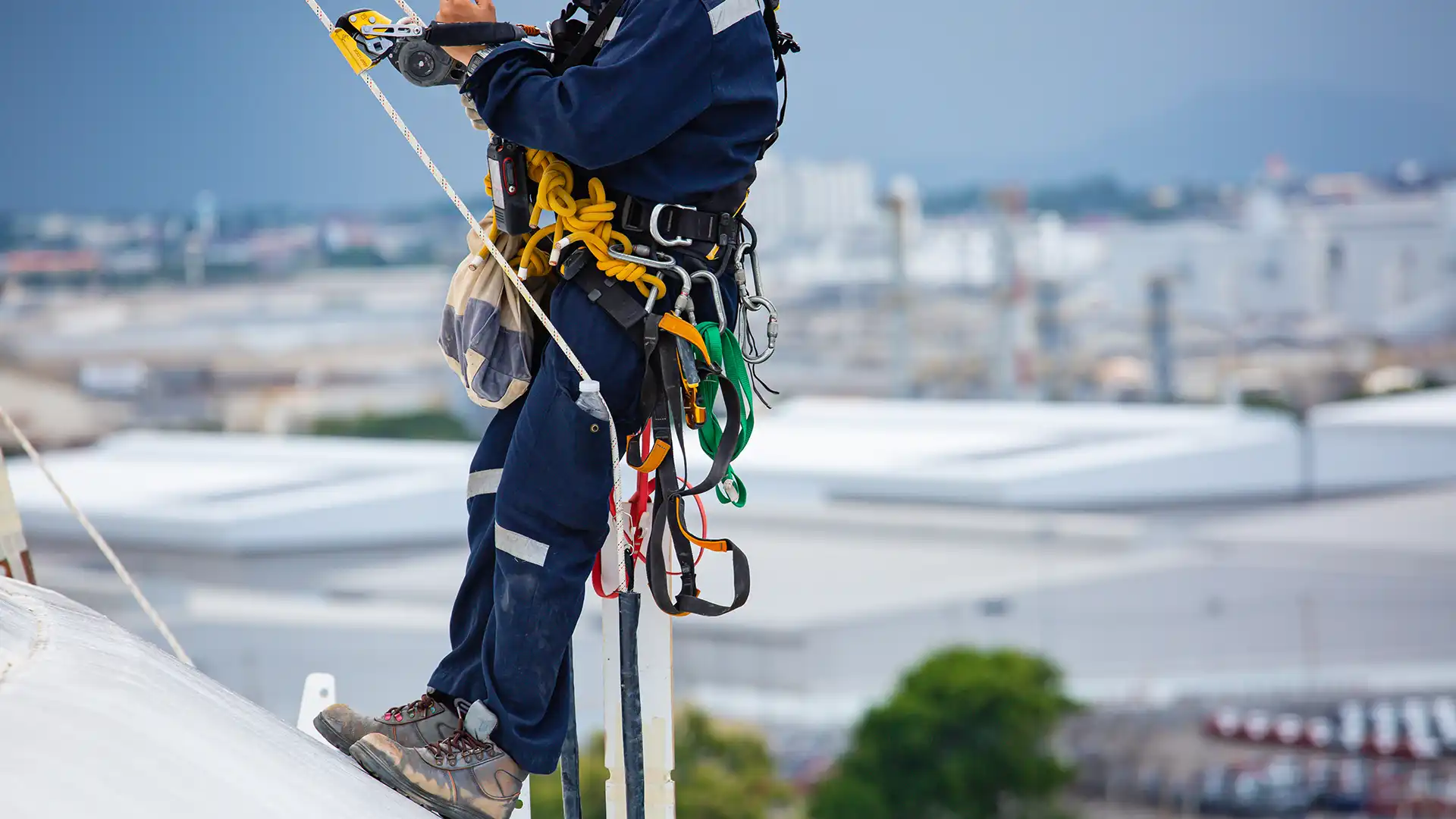
Working at height is one of the most demanding and high-risk fields in occupational safety. The lanyard is among the essential work safety equipment designed to reduce fall risks and keep the user securely positioned. However, since every work environment involves different hazards, choosing the right type of lanyard is vital. So, what are the differences between single legged and double leg lanyard models? And under which conditions should each be used?
EKS Work Safety provides clear answers to these questions with its high-standard solutions for working at height. Each lanyard model is designed for specific use cases, offering both safety and freedom of movement to the user.
What Is a Lanyard and Why Is It Critical?
A lanyard is a connecting element that links the harness to the Anchor point, protecting the user in case of a fall. It is typically made from ropes, webbing, or flexible bands. This equipment allows users to move safely within a defined area while activating during a fall to absorb energy and minimize the impact force.
EKS Work Safety designs its lanyard models to meet the needs of professionals across various industries. In sectors like construction, energy, telecommunications, and maintenance—where working at height is common—proper lanyard use forms one of the most important links in the safety chain.
Single Legged Lanyard: Effective Protection in Limited Spaces
A single legged lanyard is preferred in more controlled environments. It is typically used for stationary tasks and provides the user with a defined working distance.
Key features of a single legged lanyard:
- Lightweight and easy to carry.
- Prevents unnecessary slack in limited spaces.
- Provides secure anchoring to a single Anchor point.
- Suitable for areas with low fall risk.
Within EKS Work Safety’s product range, single legged lanyards are available in different lengths, materials, and Energy Absorbers options. They are particularly effective for tasks that require stationary positioning on vertical surfaces.
Double Leg Lanyard: Continuous Protection During Movement
A double leg lanyard is designed to keep users continuously protected even when changing positions. It operates on a “redundant connection” principle—when one leg is detached to move to a new Anchor, the other remains secured, maintaining full protection.
Advantages of Double Leg Lanyards:
- Ensures continuous connection, eliminating exposure to fall risk.
- Offers full freedom of movement across wide working areas.
- Ideal for scaffolding, tower climbing, and roofing tasks.
- Models with integrated Energy Absorbers reduce fall forces for added safety.
EKS Work Safety offers double leg lanyards in steel rope, columnar, or elastic configurations. Each model is tested in compliance with the EN 355 standard to ensure top-level safety and durability.
Energy Absorbing Lanyard: The Smart Way to Reduce Impact
The sudden force generated during a fall can have severe physical consequences. That’s why energy absorbing lanyard models are specifically designed for high-risk environments.
These systems deploy during a fall to dissipate kinetic energy in a controlled manner—reducing the load on both the user and the Anchor point.
Main benefits of energy absorbing lanyards:
- Reduces fall forces by up to 60%.
- Minimizes body impact and strain.
- Extends equipment lifespan and prevents deformation.
- Provides protection in compliance with EN 355 standards.
These models are often used together with double leg lanyard systems to provide maximum fall protection.
Lanyard Materials: The Key to Performance
The material used in a lanyard determines not only its durability but also the comfort it provides during work.
EKS Work Safety offers a variety of materials tailored to different working conditions:
- Polyester lanyards: Highly resistant to abrasion, offering long service life.
- Polyamide lanyards: More elastic, providing better shock absorption.
- Steel rope lanyards: Ideal for harsh industrial environments.
- Heat-resistant lanyards: Designed for welding or high-temperature applications.
This range ensures the perfect balance between durability and comfort for every industry.
Key Factors to Consider When Choosing a Lanyard
Lanyard selection should depend not only on the type of work but also on the working environment and other components of the work safety equipment.
Essential criteria for proper lanyard selection:
- Connection Type: Determine whether single or double Anchor connection is needed.
- Work Environment: Identify if the task involves vertical or horizontal movement.
- Energy Absorber Requirement: Use models with shock absorption in high-risk conditions.
- Carabiner Compatibility: Ensure the lanyard ends fit the carabiners perfectly.
- Standards Compliance: Verify certification to EN 354, EN 355, and EN 362.
Each of these points directly impacts user safety. EKS Work Safety applies all these standards rigorously across its entire product range.
Common Mistakes in Lanyard Use
When used incorrectly, a lanyard cannot provide the expected level of protection.
Common mistakes include:
- Using improper Anchor points.
- Knotting or over-tightening the lanyard.
- Mixing components from different manufacturers.
- Removing or incorrectly installing the Energy Absorbers.
Such errors can cause the system to fail in an actual fall. Therefore, performing visual inspections before each use is the first step toward safety.
Equipment Maintenance: Sustaining Safety Over Time
Every lanyard model requires regular maintenance. Dust, moisture, or chemical exposure can cause deterioration in the ropes, stitching, or carabiners.
Maintenance guidelines:
- Check rope and stitching integrity before each use.
- Keep carabiner locking mechanisms clean and functional.
- Replace damaged Energy Absorbers immediately.
- Conduct periodic testing according to manufacturer instructions.
These practices not only extend the equipment’s lifespan but also maintain maximum user safety.
Reduce Risk, Increase Safety with the Right Lanyard
Safe work at height begins with the right equipment and informed habits. Each lanyard model meets specific job conditions and safety needs. EKS Work Safety prioritizes user protection with high-strength materials and internationally certified designs.
Don’t leave safety to chance — reduce risk and boost efficiency by choosing the right lanyard. Take the next step toward a safer workplace and contact us today.
You can visit our LinkedIn page for more.

 by
by