
 English (UK)
  Türkçe
  العربية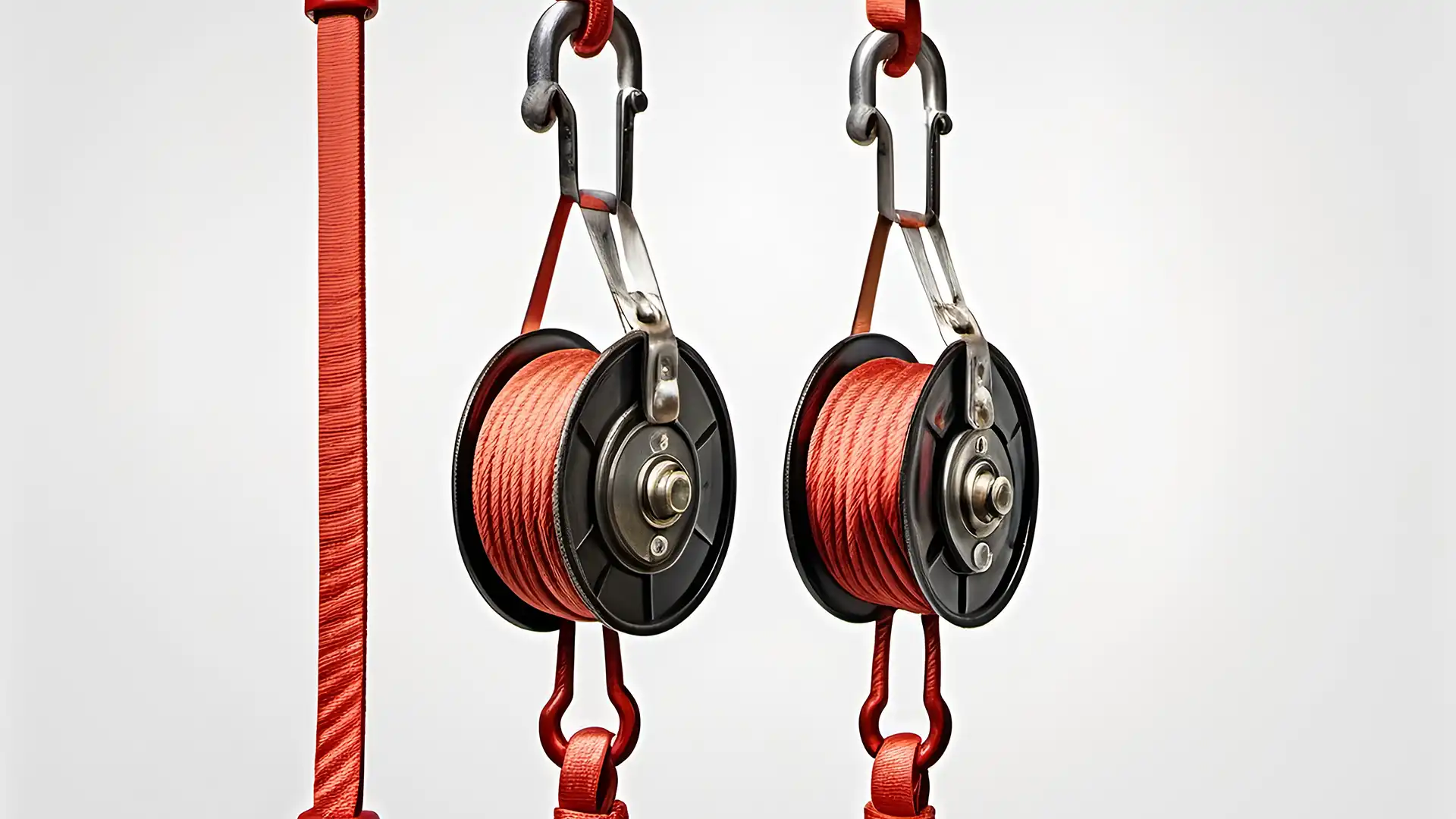
A pulley system is a mechanism that changes the direction of a rope, reduces friction, and creates mechanical advantage to lift a heavy load or a casualty with less force. Its basic working principle is simple: by combining an appropriate number of fixed and moving pulleys, the force the user must apply is reduced by a ratio of 2:1, 3:1, or more. However, this gain is not free; what is gained in force is lost in rope distance. Professional work at height and rescue pulleys are manufactured according to the EN 12278 standard and, when set up correctly, safely make possible lifting jobs that would be impossible alone.
What Is a Pulley and How Does It Work?
A pulley is a simple but powerful mechanism consisting of a wheel (sheave) around which a rope passes and a body that carries it. In work at height and rescue, a pulley has three basic functions: changing the direction of the rope, reducing friction thanks to the bearing on the sheave, and creating mechanical advantage in appropriate setups.
Two basic types of pulley are the key to understanding the logic of the system. A fixed pulley is fixed to a point and only changes the direction of the force; it provides no gain in force (for example, lifting up by pulling down). A moving pulley, on the other hand, moves with the load and provides a gain in force. The combination of these two forms the mechanical advantage system called a block and tackle.
What Is Mechanical Advantage?
Mechanical advantage is the reduction of the force the user must apply to lift a load, by appropriately arranging the pulley and rope system. For example, in a 3:1 system, theoretically it is enough to apply a force of about 30 kg to lift a load of 90 kg.
The physical basis of this is the conservation of energy: what is gained in force is lost in distance (rope length). That is, in a 3:1 system, to lift the load by 1 meter, the rope must be pulled 3 meters. The force decreases, but the rope that must be pulled lengthens. This is the basic balance of rescue and lifting systems.
Pulley Systems in Rescue: 2:1 and 3:1
In technical rescue, pulley systems are of vital importance in situations where the casualty cannot be safely retrieved by normal methods. Different mechanical advantage setups are built with the appropriate combination of pulleys and ropes:
- 2:1 system: Built with a single moving pulley; reduces the force by about half. It is used in basic lifting jobs with its simple and fast setup.
- 3:1 system: The most commonly used setup in rescue; theoretically reduces the force to one third. It offers a good balance between efficiency and complexity.
- 4:1 and higher systems: Built for heavier loads, but require more rope distance and a more complex setup.
A very important warning: these values are theoretical. The real force gain is always lower than the theoretical value due to friction in the pulley and rope system. High-efficiency pulleys with bearings reduce this loss. In addition, as the system becomes more complex, the total load on the anchor points also increases; this is why it must be verified that the anchors have the capacity to bear this load.
Pulley Types and Features
Professional pulleys vary according to different tasks:
- Single pulley: Single-sheave, the most basic structure. Used in rope redirection and simple mechanical advantage systems.
- Double (tandem) pulley: Two sheaves in the same body; enables compact and orderly setup of more complex block and tackle systems.
- Swivel pulley: Has a rotating connection that prevents the rope from twisting and tangling.
- Progress capture pulley: Has a mechanism that moves the load in only one direction and prevents back-slipping; it locks the system during lifting and increases safety in rescue.
It is not enough to look only at the load capacity in pulley selection; the appropriate rope diameter, sheave diameter, bearing system, working load, breaking strength, and connection points must be evaluated together.
How to Choose and Use the Right Pulley System?
The basic criteria to consider in pulley and system selection:
- Standard: An EN 12278 certified pulley for professional use; the certification, working load, and purpose of use must be verified from the technical document.
- Rope compatibility: The pulley’s sheave diameter must suit the diameter of the rope used; incompatibility reduces efficiency and wears the rope.
- Task: Single for simple redirection; double/tandem for complex lifting; progress capture pulley for safety during lifting.
- Anchor evaluation: As mechanical advantage increases, the load on the anchor also increases; the anchor capacity must be checked accordingly.
- Pre-use check: The free rotation of the sheave, the side plates, the connection eye, and the body must be checked for cracks/deformation before each use (pre-use and periodic inspection under EN 365).
A pulley system is safe only when it is set up correctly with the right components and used by trained people. An incorrectly set up block and tackle does not provide the expected advantage and can overload the anchors.
Frequently Asked Questions
What does mechanical advantage mean?
It is the reduction of the force needed to lift a load, by appropriately arranging the pulley and rope system. For example, in a 3:1 system, the load can theoretically be lifted with one third of the force; but in return, the rope is pulled three times as much.
Does a 3:1 pulley system really reduce the force to one third?
Theoretically yes, but in reality the gain is slightly lower due to friction. High-efficiency pulleys with bearings reduce this loss.
What is the difference between a fixed and a moving pulley?
A fixed pulley only changes the direction of the force, providing no gain. A moving pulley moves with the load and provides a gain in force. The combination of the two forms the block and tackle system.
Which standard is a rescue pulley manufactured to?
Professional work at height and rescue pulleys are manufactured according to the EN 12278 standard. The product’s actual certification and working load must be checked from its technical document.
Small Wheel, Big Advantage
The pulley system brings one of the most elegant principles of physics to work at height and rescue: much work with little force. A correctly set up block and tackle safely makes possible a lifting job that would be impossible alone; but for this, the right pulley type, the right rope compatibility, and the correct calculation of anchor loads are needed. A small wheel, in the right system, turns into a big advantage.
With over 20 years of experience, EKS Work Safety provides pulleys, ropes, carabiners, tripods and rescue winches, and all rescue equipment within a safe, unified system. For a standards-compliant pulley system suited to your work area and rescue scenario, you can contact EKS Work Safety.
Visit our LinkedIn page to learn more.

 by
by