
 English (UK)
  Türkçe
  العربية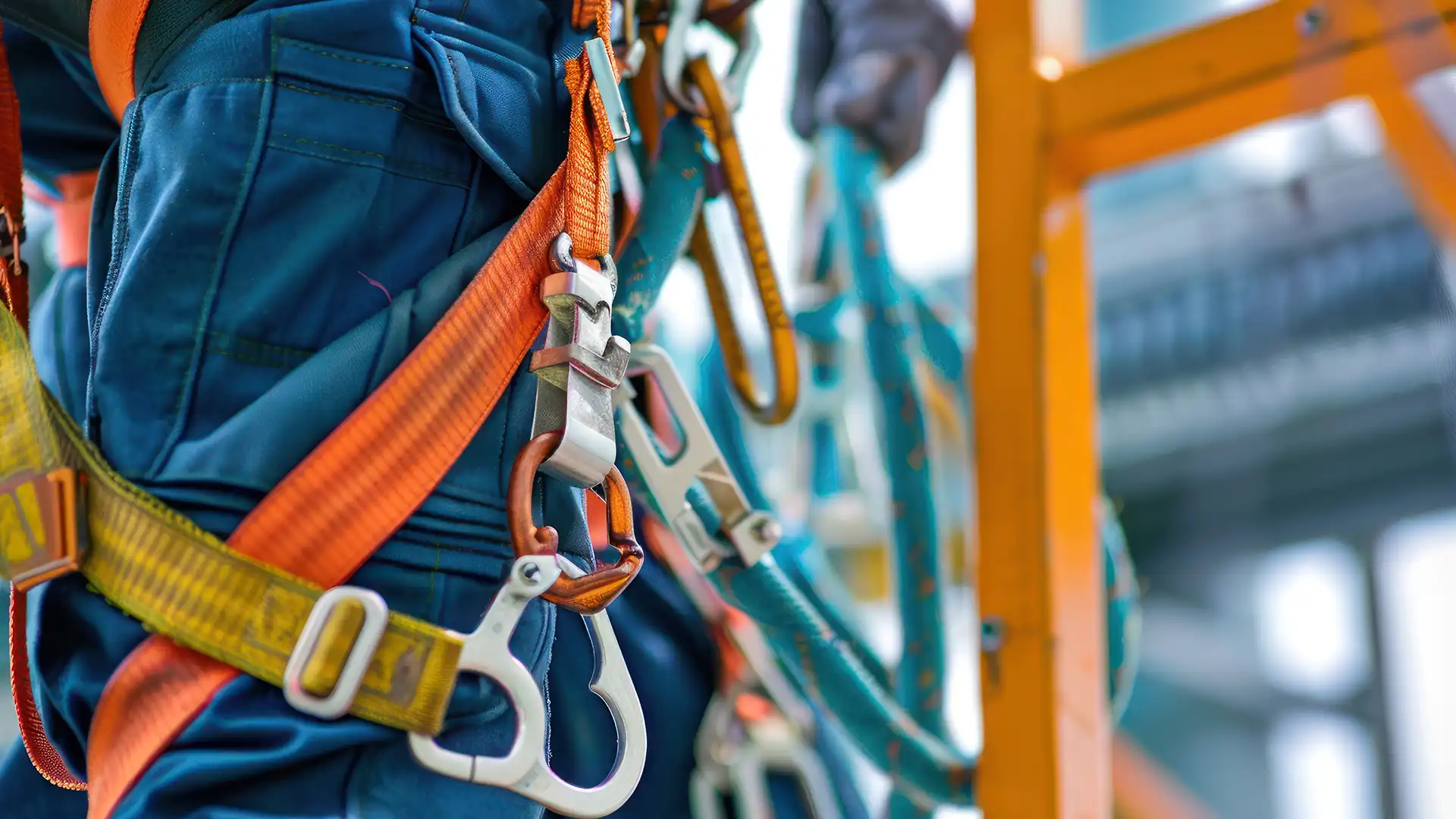
Working at height is one of the most critical areas of occupational safety. Even a small mistake can lead to severe consequences. Every piece of equipment used plays a vital role in protecting the worker’s life. In particular, the lanyard and carabiners, as the core components of fall arrest systems, must be properly selected and used. Otherwise, overall safety performance can be significantly compromised.
EKS Work Safety aims to enhance the safety of those working at height through high-standard solutions developed over many years. Its wide range of lanyard and carabiner systems offers both durability and ergonomics to meet the needs of professional users.
The Role of Lanyards and Carabiners in Safety Systems
A lanyard connects the harness to an Anchor, allowing the user to work safely within a defined area. The carabiner acts as the locking mechanism that secures this connection and completes the system with its load-bearing capacity.
The harmony between these two components ensures vital protection by properly distributing the kinetic energy generated during a fall. If the carabiner lacks sufficient strength or the lanyard is used in an incorrect position, the entire system may fail. Therefore, safety depends not only on product quality but also on the correct combination.
Key Points When Selecting a Lanyard
The choice of lanyard must match the working environment and the level of risk. Using the same model for every task increases the likelihood of failure.
When selecting the right lanyard, consider the following criteria:
- Purpose of Use: Choose the model according to whether it is for restraint, positioning, or fall arrest.
- Shock Absorption Feature: To reduce the sudden impact force during a fall, choose a lanyard equipped with Energy Absorbers.
- Length: Standard lanyards typically range between 1.5–2 meters, but adjustments should be made depending on height and reach.
- Material: Polyester or polyamide materials provide resistance to abrasion, ensuring long life and high reliability.
EKS Work Safety offers flexible solutions with single-legged lanyard and double leg lanyard models suitable for different job sites. This variety helps workers maintain both mobility and safety.
Advantages of Using an Energy Absorbing Lanyard
During a fall, the sudden impact force directly affects the user’s body and can cause severe injury. The energy absorbing lanyard is a safety solution designed specifically to minimize this risk.
The system deploys during a fall, dissipating energy and distributing the impact in a controlled way. As a result, both the user and the Anchor point experience less strain. These lanyards, which include Energy Absorbers, significantly enhance safety in high-altitude or movement-intensive work environments.
Main advantages of energy absorbing lanyards:
- Reduces fall impact force by up to 60%.
- Minimizes the shock transmitted to the body.
- Extends equipment lifespan and prevents deformation.
- Provides protection in compliance with EN 355 standards.
With these features, the energy absorbing lanyard not only improves safety but also boosts overall work efficiency.
Carabiner Selection: A Small but Vital Detail
A carabiner should never be the weakest link in the safety chain. Poor-quality or defective carabiners can cause system failure during a fall. When choosing a carabiner, the following factors must be considered:
- Locking Mechanism: Screw-lock or automatic-lock models prevent accidental opening.
- Material Strength: Steel carabiners withstand higher loads, while aluminum versions offer lightweight convenience.
- Compliance with Standards: Carabiners that meet EN 362 are tested and certified for international safety standards.
- Connection Compatibility: Ensure the carabiner fits the lanyard hook or loop structure properly.
EKS Work Safety combines ergonomic design and strength in its carabiners, offering both practicality and reliable protection.
Possible Consequences of Lanyard and Carabiner Incompatibility
Incompatible equipment combinations can drastically reduce fall arrest performance. Mixing components from different manufacturers often invalidates certification compliance, rendering verified strength values unreliable.
Key risks of improper compatibility:
- Delayed system locking during a fall
- Carabiner deformation or accidental opening
- Loss of shock-absorption function in the lanyard
- Uneven load distribution at the connection point
Such errors not only shorten equipment lifespan but also endanger worker safety directly.
How to Choose the Right Lanyard and Carabiner Combination
The efficiency of a safety system depends on the perfect harmony between the lanyard and the carabiner.
Follow these steps to ensure the correct combination:
- Define the purpose of use — fall arrest or positioning.
- Select the suitable lanyard type — energy absorbing, restraint, or positioning.
- Check carabiner type and size — must fit the lanyard connector and locking system.
- Match materials — avoid combining a steel lanyard with an aluminum carabiner.
- Verify standard compliance — both components must have valid EN certifications.
All lanyard and carabiner models produced by EKS Work Safety are tested according to international standards, ensuring maximum performance in the field.
Equipment Maintenance: Sustaining Safety
Both lanyards and carabiners require regular maintenance. Dust, moisture, chemical residue, or mechanical wear can lower their safety performance.
Essential maintenance points:
- Replace the lanyard if fraying, cuts, or seam damage are detected.
- Keep carabiner locking mechanisms clean, unlubricated, and fully functional.
- Always perform a visual inspection before use.
- Conduct periodic tests according to the manufacturer’s maintenance schedule.
Regular maintenance not only extends the equipment’s lifespan but also preserves user safety. EKS Work Safety simplifies this process with designs that allow for easy inspection and cleaning.
The Importance of Training and Proper Use
Even the most advanced safety system becomes ineffective if used incorrectly. Every worker operating at height must understand the basic principles of lanyard and carabiner operation.
Training programs should cover:
- Proper connection and positioning techniques
- Fall distance calculation methods
- Pre-use inspection procedures
- Correct Anchor point selection
This knowledge not only increases equipment efficiency but also strengthens the overall culture of safety on site.
Take Control of Risk with the Right Equipment
When working at height, safety is not optional — it’s essential. Correct use of lanyards and carabiners prevents minor errors from turning into major accidents. The choice, maintenance, and correct application of equipment form the foundation of workplace safety.
EKS Work Safety supports safe operations at height with durable, ergonomic designs compliant with international standards. Take the next step toward safety — contact us to discover the most suitable solutions for your work environment.
You can visit our LinkedIn page for more.

 by
by