
 English (UK)
  Türkçe
  العربية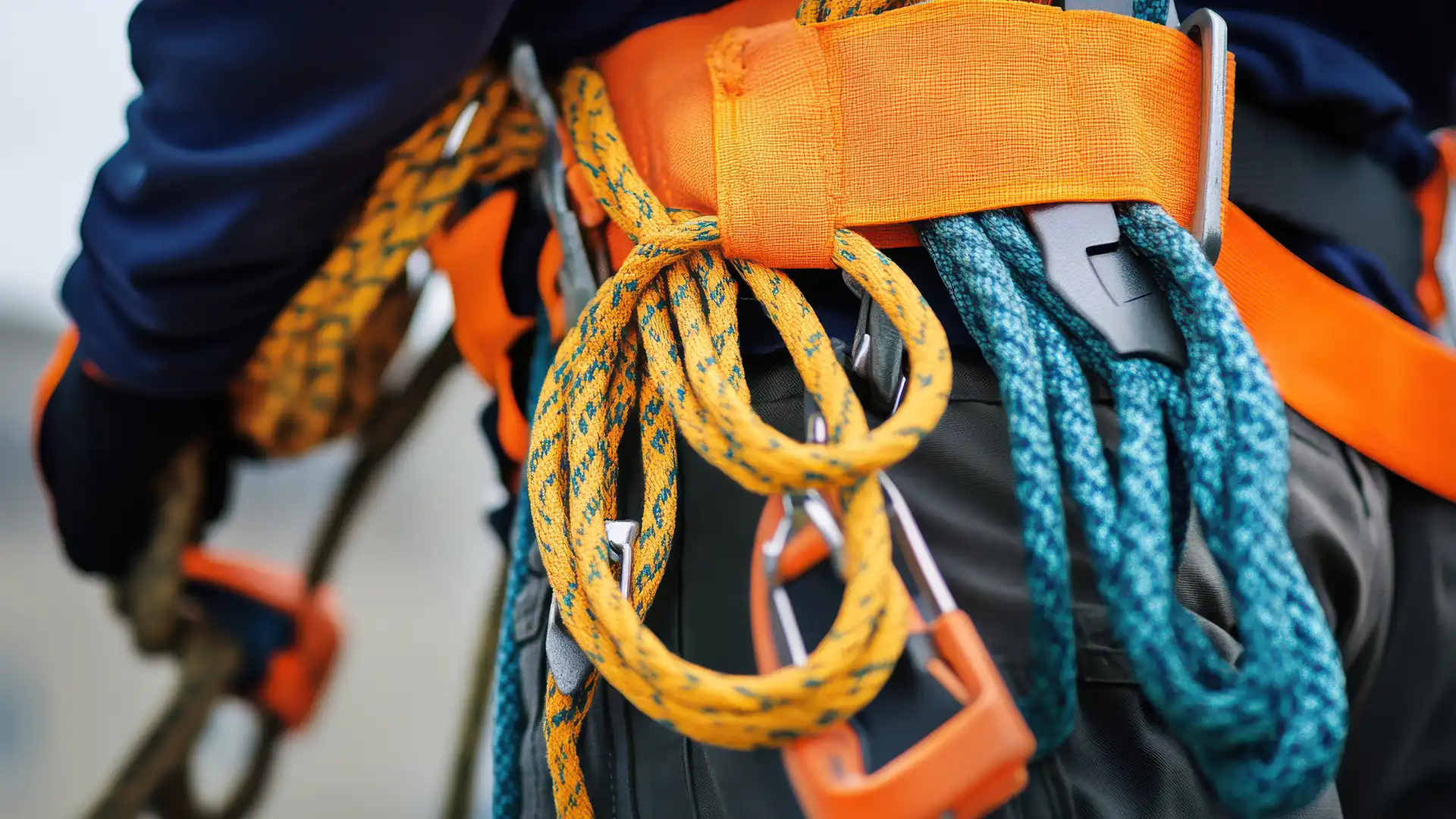
A safety rope is a lifeline produced in a double-layered structure called kernmantel, which carries personnel in rope access, work positioning, and rescue work. The most fundamental distinction is between static and dynamic rope: static (low-stretch) ropes are manufactured according to the EN 1891 standard and are used for controlled descent-ascent and rope access; dynamic ropes are manufactured according to the EN 892 standard, are more elastic, and are designed to absorb fall energy in free climbing. Choosing the wrong rope type — for example, using a static rope for fall arrest — creates a serious risk. The right rope must be chosen according to the purpose of use, its standard, and the devices to be used.
What Kind of Structure Does a Safety Rope Have?
Modern safety ropes are produced in a kernmantel structure. This structure consists of two layers: the inner core (kern) and the outer sheath/mantle (mantel).
The core is the load-bearing part of the rope; it provides most of the rope’s strength. The outer mantle protects the core against abrasion, cuts, UV, and contamination. Quality ropes also contain an identification tape inside them carrying the standard, year of manufacture, and type information. This two-layered structure gives the rope both high strength and resistance to external effects.
Static Rope and Dynamic Rope: The Basic Difference
The heart of safety rope selection lies in understanding the static-dynamic distinction. The two are designed for different jobs and cannot be used in place of one another.
Static (Low-Stretch) Rope — EN 1891
Static ropes are produced to stretch very little under load. This low stretch provides efficiency and position stability in rope access and controlled descent-ascent. It is subject to the EN 1891 standard and comes in two types: Type A (for general use, more durable) and Type B (thinner, lower performance, limited use). It is the rope type preferred in rope access, work positioning, rescue, and caving.
Dynamic Rope — EN 892
Dynamic ropes are designed to absorb fall energy by stretching in a controlled manner under load. This stretch reduces the impact force on the body in a possible fall during free climbing. It is subject to the EN 892 standard and is mainly for mountaineering/free climbing.
The critical point is this: a static rope does not absorb fall energy. This is why a static rope cannot be used alone as a fall arrest system in a job with a fall risk; in such cases, a separate fall arrest system with an energy absorber is required.
Rope Material: Polyamide or Polyester?
The performance of ropes also depends on the fiber used. The two most common materials are polyamide (nylon) and polyester.
- Polyamide (nylon): Absorbs impact energy better; preferred when elasticity and energy absorption are priorities.
- Polyester: More stable against UV and wetting, stretches less; advantageous in long-term installations exposed to external conditions.
- Steel wire rope: Offers superior resistance to abrasion and chemicals, but compromises on flexibility; used in certain industrial lifeline applications.
Typical textile safety ropes usually offer a breaking strength in the range of 20-30 kN according to their diameter and structure. The right material must be chosen according to the conditions of the work environment (UV, humidity, chemicals, abrasion).
How to Choose the Right Safety Rope?
The basic criteria to consider in rope selection:
- Purpose of use: Static (EN 1891) for rope access and positioning; dynamic (EN 892) for free climbing.
- Standard and type: EN 1891 Type A is generally preferred in rope access; the marking and identification tape on the rope must be legible.
- Diameter and device compatibility: A rope suitable for the diameter range allowed by the descent/ascent and rope grab devices used must be chosen (typically 10-11 mm is common in rope access).
- Material: Polyester for jobs exposed to external conditions (UV, humidity); polyamide for jobs where impact absorption is a priority.
- Periodic inspection: The rope must be checked visually before each use (cuts, abrasion, hardening, chemical stains); it must be subjected to regular detailed inspection.
A damaged rope, one exposed to chemicals, or one that has taken a fall load must be immediately taken out of service, even if it appears intact. The service life of a rope varies according to the material, intensity of use, and storage conditions.
Rope Maintenance and Service Life
The safety of a safety rope is preserved through correct maintenance. The rope must be kept away from sharp edges, contact with chemicals and solvents must be avoided, and it must be stored in a clean and dry environment, away from direct sunlight. A soiled rope must be cleaned in accordance with the manufacturer’s instructions.
In addition to daily visual inspection, the rope must be subjected to detailed inspection by an authorized person at regular intervals (usually every 6-12 months). The identification tape and record system enable tracking the rope’s history and correctly managing its service life.
Frequently Asked Questions
What is the difference between static and dynamic rope?
A static rope (EN 1891) stretches very little under load and is used for rope access, positioning, and rescue. A dynamic rope (EN 892) is more elastic, absorbs fall energy, and is for free climbing. The two cannot be used in place of one another.
Which rope is used for rope access?
In rope access, static (low-stretch) kernmantel ropes compliant with the EN 1891 standard, mostly Type A, are generally preferred. The diameter must be chosen to suit the descent/ascent devices used.
Can a static rope be used for fall arrest?
No. A static rope does not absorb fall energy. In jobs with a fall risk, a separate fall arrest system with an energy absorber is required.
When should a safety rope be replaced?
A rope with cuts, abrasion, hardening, chemical stains, or one that has taken a fall load must be immediately taken out of service. In addition, the service life stated by the manufacturer, intensity of use, and storage conditions must be taken into account.
The Right Rope Is the Foundation of Safe Access
The safety rope is the most basic equipment of rope access and rescue; it is the backbone that carries the weight of the personnel. The right answer to the questions of static or dynamic, which diameter, which material, varies according to the type of work and the devices used. Knowing the static-dynamic distinction, choosing the right standard and material, and regularly inspecting the rope form the foundation of safe access. The wrong rope can be the weakest link; the right rope is the backbone carrying the entire system.
With over 20 years of experience, EKS Work Safety provides safety ropes, harnesses, rope grabs, carabiners, and all rope access equipment within a safe, unified system. For a standards-compliant rope and equipment selection suited to your site and task, you can contact EKS Work Safety.
Visit our LinkedIn page to learn more.

 by
by