
 English (UK)
  Türkçe
  العربية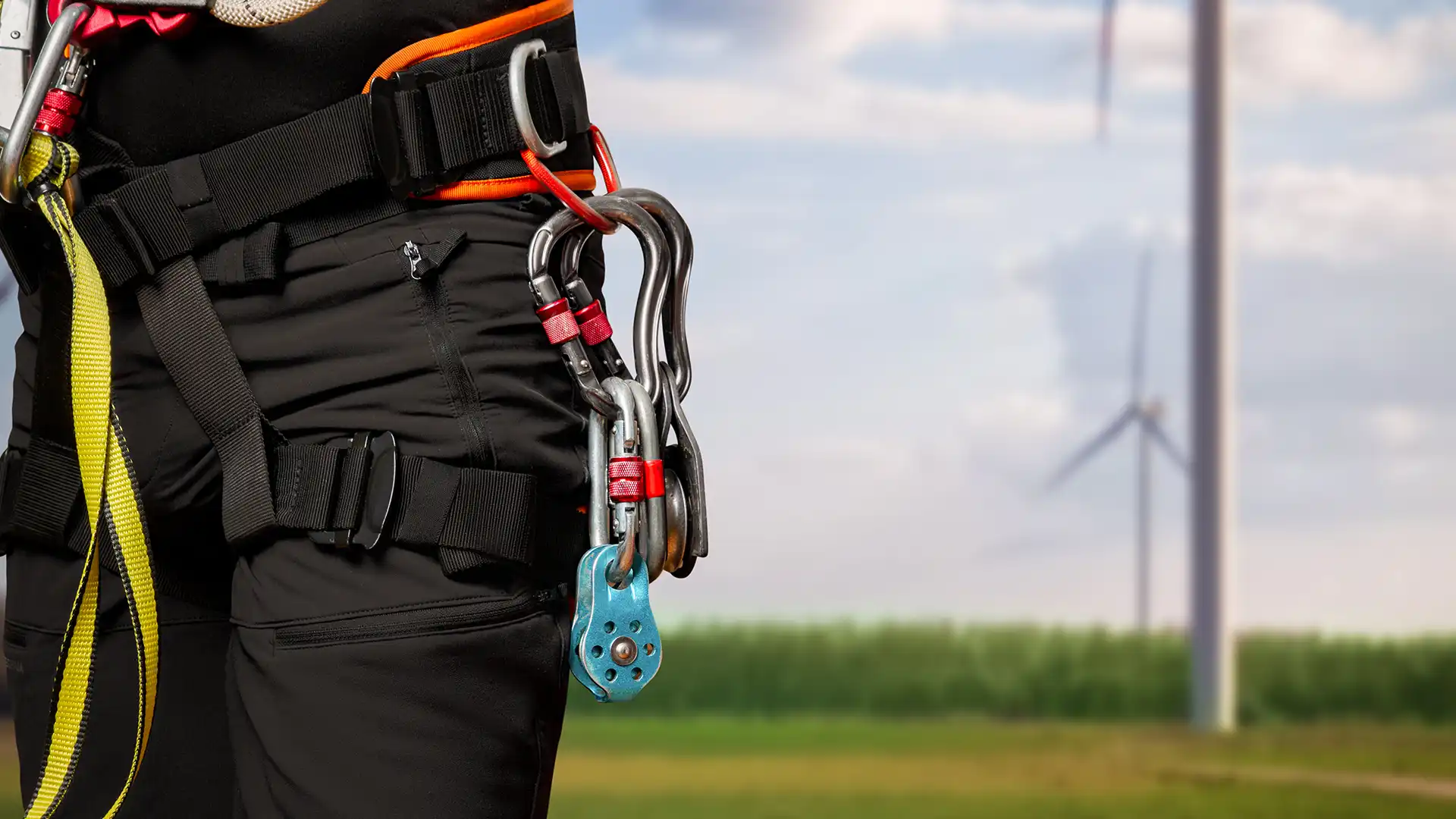
A carabiner is a metal connecting element with a spring-loaded gate that links the harness to the lanyard, the lanyard to the anchor, and the other parts of the system to one another in work at height. Despite looking small, it is a critical link carrying the load of the entire fall arrest system: a carabiner of the wrong type or loaded incorrectly can be the weakest point of the system. Occupational safety carabiners are manufactured according to the EN 362 standard; choosing the right lock type, always loading the carabiner on its major axis, and not confusing a sport climbing carabiner with a professional connector are the foundations of a safe connection.
What Is a Carabiner and What Does It Do in the System?
A carabiner is a metal connector with a spring-loaded gate that links two safety elements quickly and securely. In work at height, a carabiner creates connections between components such as the harness, lanyard, energy absorber, rope grab, retractable fall arrest, and anchor.
However, a carabiner’s function is not merely “joining two things.” Its real skill is that its gate does not open under load, it stays in the correct position, and it carries the force applied to it correctly (on its major axis). This is why a carabiner is a much more complex safety mechanism than a simple hook.
Carabiner Lock Types: Screw-Lock or Automatic?
The safety of a carabiner largely depends on its locking mechanism. In occupational safety, two lock types basically stand out.
Screw-Lock (Manual) Lock
This is the most common and simple system, in which the user manually locks a sleeve by turning it after closing the gate. It is reliable, but it has a weak point: turning the lock can be forgotten. An unlocked screw-lock carabiner is as risky, in terms of safety, as an open gate. This is why it must always be checked after each connection that the lock is tightened.
Automatic (Triple-Lock) Lock
This is a system that locks itself when the gate closes. It usually works with three actions (triple action) in a “pull-twist-open” logic; that is, three separate and deliberate movements are required to open it, which makes accidental opening almost impossible. Because it eliminates the risk of “forgetting the lock,” automatic locks are preferred especially at critical points that are frequently connected and disconnected.
Why Is the Major Axis So Important?
The load a carabiner can bear depends on the direction from which the force comes, and this is the most neglected point of safety. A carabiner shows its full strength only on its major axis (its long axis, the load line).
Three strength values are usually marked on a carabiner in kN (kilonewtons): major axis (highest, typically 20-25 kN or above), minor axis (much lower), and gate open (lowest). If a carabiner is loaded on its minor axis or its gate rests against a surface, its strength drops significantly and it can break at a much lower force than expected. This is why it must be ensured that the carabiner always stays on its major axis during work and that its gate is free.
Material and Shape: Steel or Aluminum?
Carabiners are manufactured in different materials and shapes; the right choice depends on the usage scenario.
- Steel carabiner: Ideal for places where durability is more important than weight. It is wear-resistant; preferred in heavy and intensive use areas such as industry, construction, and energy.
- Aluminum carabiner: Offers a balance of lightness and strength. It reduces fatigue in jobs where personnel move constantly and carry a lot of equipment.
- Shape (oval, D, pear/HMS): The D type directs the load to the major axis; the pear/HMS type with its wide mouth is suitable for rope and knot systems; the oval type offers balanced general use.
An important warning: A sport climbing carabiner (EN 12275) must not be confused with a professional occupational safety connector (EN 362). EN 362 certified connectors must be used in occupational safety applications.
How to Choose and Check the Right Carabiner?
The following points must be evaluated together in the selection and use of a carabiner:
- Standard: An EN 362 certified connector for occupational safety; the marking must be legible on the body.
- Lock type: An automatic (triple-lock) lock at critical and frequently used points; it reduces the risk of forgetting the lock.
- Material: Steel for heavy industry, aluminum for mobile work.
- Gate opening and compatibility: The anchor, ring, or device to be connected must suit the carabiner’s mouth and shape; a suitable wide-mouth connector must be used on wide profiles.
- Pre-use check: Before each use, the gate, spring, lock, and body must be checked for cracks/deformation; a carabiner that has taken a fall load or is deformed must not be used.
The real safety of a carabiner is provided not only by its strength value, but by the right type selection, correct loading, and regular inspection.
Frequently Asked Questions
Is a screw-lock or automatic carabiner safer?
Both are safe when used correctly, but the automatic (triple-lock) lock is considered safer at critical and frequently used points because it eliminates the risk of forgetting the lock. On a screw-lock carabiner, it must be checked every time that the lock is tightened.
Why should a carabiner not be loaded on its minor axis?
A carabiner shows its full strength only on its major axis. When loaded on its minor axis or with the gate open, its strength drops significantly and it can break at a much lower force than expected.
Which carabiner standard is required in occupational safety?
EN 362 certified connectors are used in work at height and personal fall protection. A sport climbing carabiner (EN 12275) is not a substitute for occupational safety.
Should I choose a steel or aluminum carabiner?
Durable steel carabiners are preferred for heavy and intensive industrial use; aluminum carabiners for jobs where personnel move constantly and lightness is important.
Small Equipment, Big Responsibility
Work at height safety is a chain, and a chain is only as strong as its weakest link. The carabiner is one of the most critical but often overlooked links of this chain. The right lock type, the right material, and above all correct loading on the major axis transform this small connecting element into a real safety lock. This is why carabiner selection and inspection must never be underestimated.
With over 20 years of experience, EKS Work Safety provides carabiners, harnesses, lanyards and energy absorbers, anchors, and all connection equipment within a safe, unified system. For an EN 362 standard-compliant carabiner selection suited to your site and task, you can contact EKS Work Safety.
Visit our LinkedIn page to learn more.

 by
by