
 English (UK)
  Türkçe
  العربية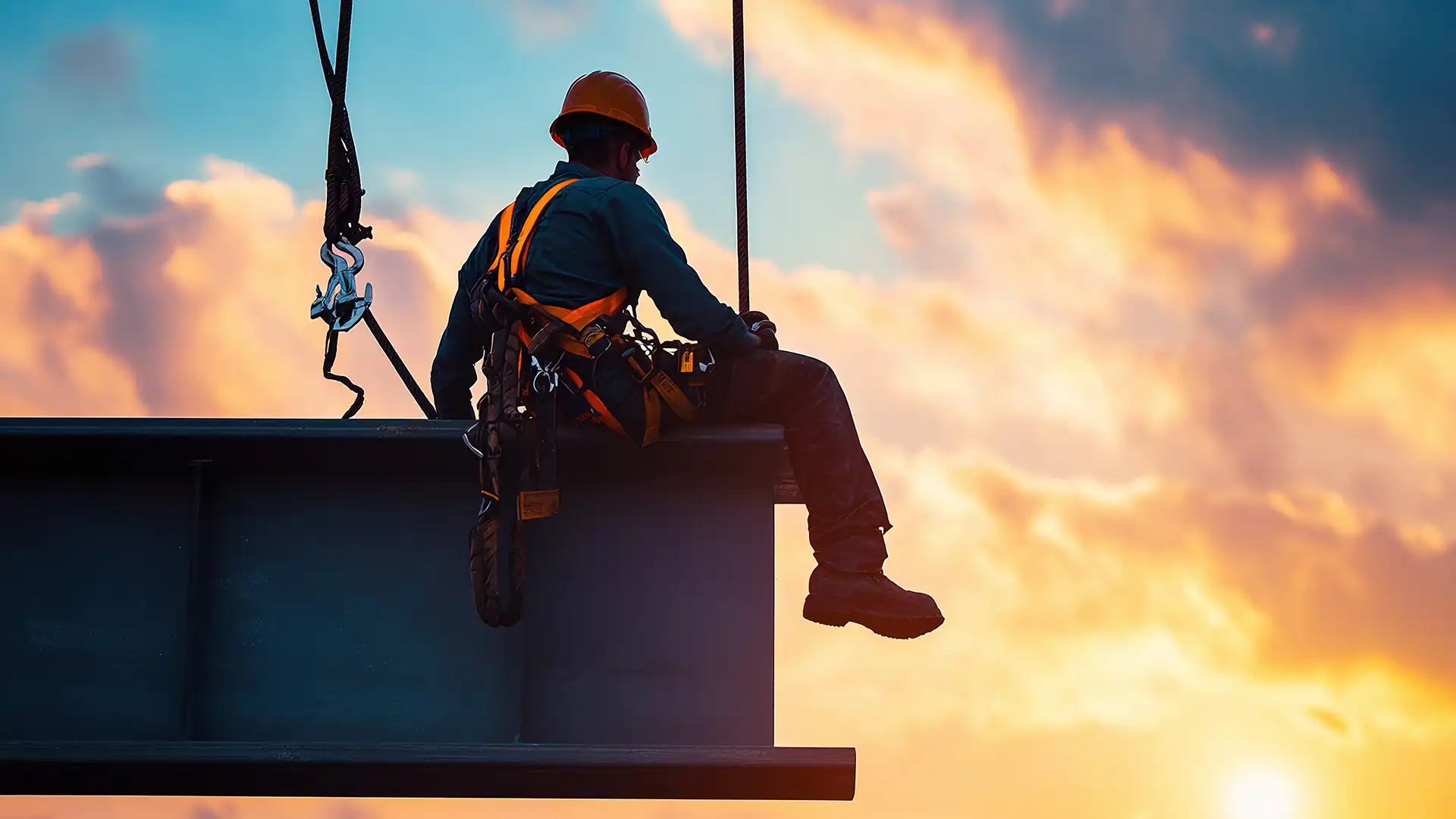
One of the fundamental elements of working-at-height safety is the harness. However, a common question frequently raised on site is this: Is a harness sufficient on its own, or must it be used together with additional equipment to ensure safety?
When correctly selected and used with proper connection points, a harness helps protect workers. However, risks in working at height are not limited to the fall itself; they are also related to how the force generated during a fall is transmitted to the body. For this reason, the highest level of safety is achieved when the harness is used together with an energy absorbing lanyard, Retractable Fall Arrests, and carabiners.
What Is a Harness and What Does It Do?
A harness is designed to secure the worker at height, support the body during a fall, and optimize force distribution. In particular, full body harness types are engineered to distribute the load generated during a fall evenly across the shoulders, waist, and legs, helping to prevent serious injuries.
The primary functions of a harness include:
- Force distribution: Prevents fall forces from concentrating on a single point of the body
- Controlled connection: Provides a secure link to Anchors through connection elements such as carabiners
- Full body support: Reduces excessive loading on the waist and shoulder areas
These characteristics show that a harness is not merely a fastening component, but a vital support mechanism during a fall.
Is a Harness Enough on Its Own?
The short answer is no. A harness is essential for protecting the worker’s body, but using only a harness in working-at-height environments may not sufficiently reduce all risks. This is because a harness does not include a mechanical mechanism to stop a fall on its own.
For example:
- Forces generated during sudden stops cannot be controlled by the harness alone
- Free fall distance cannot be managed using only a harness
- In dynamic work scenarios, a harness connection may not provide adequate stability
Therefore, a harness is typically used in combination with the following equipment:
- Energy absorbing lanyard: Mechanically absorbs fall forces
- Retractable Fall Arrests: Locks within milliseconds during a fall to provide immediate control
- Carabiners and Anchors: Ensure correct connections and load-bearing capacity
This combination not only stops a fall but also manages its impact in a controlled and safe manner.
Differences Between a Harness and Other Equipment
Each component used in working at height has a specific function. For this reason, the idea that “one piece of equipment is sufficient” is technically incorrect.
Harness
- Secures and supports the body
- Optimizes force distribution
- Does not stop a fall; it only provides body attachment
Lanyard
- Connects the harness to the anchor point
- Has a fixed length that may create slack
- May require additional support during sudden stops
Energy Absorbing Lanyard
- Includes Energy Absorbers
- Reduces fall forces
- May be limited in some scenarios due to required deployment distance
Retractable Fall Arrests
- Provides rapid locking during a fall
- Eliminates rope slack
- Delivers higher performance, especially in dynamic working areas
Each piece of equipment provides value individually, but system effectiveness increases significantly when they operate together.
What Should Be Considered for the Right System?
A harness alone does not constitute a complete safety solution; an effective system approach is required. To ensure system efficiency, several key factors must be considered:
1. Correct Connection Components
The carabiners and Anchors used with the harness must match the system’s load-bearing capacity. Incorrect or low-strength connectors reduce system performance.
2. Work Area Analysis
Not all sites carry the same level of risk. Platforms, scaffolding, and towers require different fall arrest systems.
3. Equipment Compatibility
The harness, lanyard, energy absorbing lanyard, and Retractable Fall Arrests must function compatibly. Incompatible equipment reduces system effectiveness.
4. Periodic Inspections
All work safety equipment must be inspected regularly for wear or deformation.
These steps enhance safety not simply by selecting equipment, but by building the correct system.
Work Safely with EKS Harness Solutions
EKS Work Safety approaches harness solutions not as standalone products, but as part of an integrated working-at-height safety system. Through correct equipment selection, site analysis, and connection compatibility, system performance is maximized.
To identify harness solutions suitable for your work area and to work safely at height, you can contact us.
Visit our LinkedIn page to learn more.

 by
by