
 English (UK)
  Türkçe
  العربية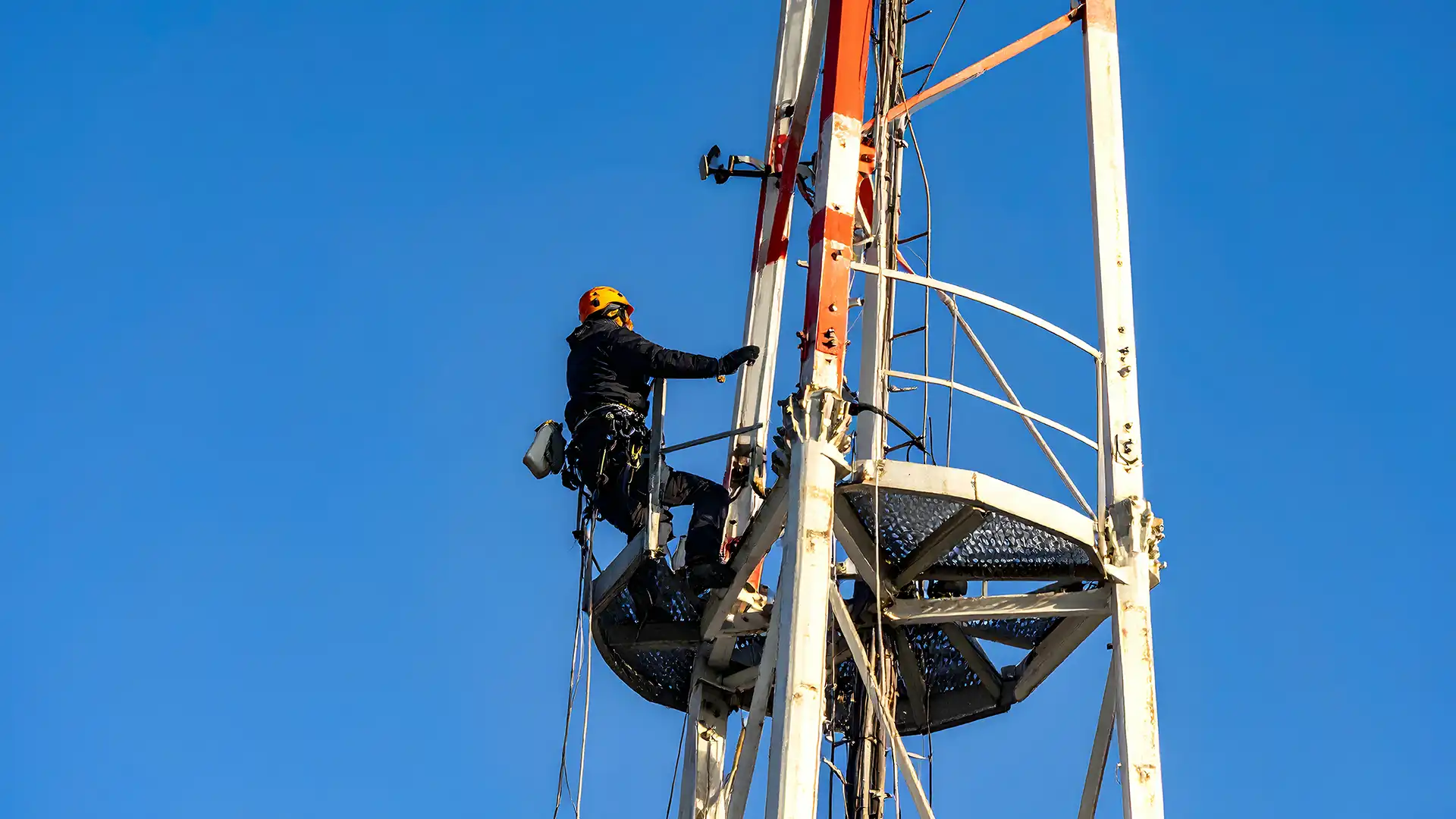
A mobile fall arrester (rope grab) is a fall arrest device that slides along a flexible rope attached to an upper anchor point, moving with the worker during vertical or inclined work, and locks automatically by gripping the rope when a fall occurs. The device follows the worker while climbing or descending; in a sudden fall, it locks onto the rope without any action from the user and stops the fall within a short distance. These devices, used together with a flexible anchor line, are subject to the EN 353-2 standard. Safe use rests on three basic conditions: using the device only with the rope specified by the manufacturer, attaching it in the correct direction, and connecting it to the chest attachment point of the harness with a short connection.
What Is a Mobile Fall Arrester and How Does It Work?
In technical literature, a mobile fall arrester is called a “guided type fall arrester.” It is called guided because the device moves along an anchor line in a guided manner. The line is fixed only at its upper end; the device slides up and down along it together with the worker.
Inside the device there is a cam or lever mechanism that grips the rope. At normal climbing and descending speed, this mechanism lets the rope run freely. However, when the sudden speed and pull created by a fall occur, the mechanism clamps the rope and the device locks. This process is automatic; the worker does not need to do anything while falling.
A mobile fall arrest system basically consists of three parts:
- Upper anchor point: The point to which the line is attached, strong enough to bear the fall load.
- Flexible anchor line: Usually a kernmantel synthetic rope or a steel wire rope.
- Travelling fall arrester: The device that slides on the line and locks in a fall; some systems also include an integrated energy absorber.
This system is one of the fall arrest systems defined under EN 363 and must always be used together with a full body harness.
What Is the Difference Between EN 353-1 and EN 353-2?
Guided type fall arresters are divided into two separate standards according to the structure of the anchor line, and this distinction is often confused in the field:
- EN 353-1 (rigid anchor line): Devices working on rail systems or on taut steel wire fixed at both ends. Used in permanent vertical systems such as fixed ladders, chimneys, and towers.
- EN 353-2 (flexible anchor line): Devices working on a rope or wire fixed only to an upper anchor point. They can be installed temporarily or permanently, which provides great flexibility on changing sites.
The critical point is this: a device designed for EN 353-1 cannot be used on a rope, and an EN 353-2 device does not replace a rigid rail system. In addition, the EN 353-2 standard was updated in 2024; therefore, the product documents should be checked to see which version the device is certified to.
Where Is a Mobile Fall Arrester Used?
Mobile fall arresters are preferred in any job where the worker constantly changes position on a vertical or inclined surface:
- Climbing fixed ladders without cages or guards
- Maintenance on telecommunications and energy towers and poles
- Ascent and descent on industrial structures such as silos, tanks, and chimneys
- Creating temporary vertical lines during scaffolding and facade installations
- Mobile work on sloped roofs
- Controlled ascent and descent in wells and shafts
What these jobs have in common is that the worker must be protected continuously over a long vertical distance. A mobile fall arrester provides this continuity without the worker having to change connections at every step.
What Is the Difference Between an Automatic and a Manual Rope Grab?
Mobile fall arresters are divided into two main groups according to how they move on the rope. The right type must be chosen according to the movement pattern of the job.
Automatic (Following) Rope Grab
An automatic rope grab slides along the rope by itself as the worker climbs or descends, and does not require any manual intervention by the user. In jobs requiring long and continuous vertical movement, such as continuous climbing on a tower or ladder, the worker’s hands remain free and they can focus on their work. This is why automatic models are the most common choice in jobs with frequent ascent and descent.
Manual (Positionable) Rope Grab
A manual rope grab allows the worker to move the device by hand to the desired position on the rope and fix it there. In jobs where work will be carried out at a certain height for a long time, the device is fixed at that point and the free fall distance is kept short in a possible fall. However, the worker must not forget to reposition the device as they move; otherwise the device may remain below the worker and the fall distance becomes dangerously long.
Some models offer both features together: they follow automatically during climbing and can be fixed at the working point by switching to the parking position. This flexibility is a great advantage on sites where both climbing and stationary work are carried out in the same shift.
Why Must the Fall Clearance Be Calculated in Advance?
A mobile fall arrester stops a fall not instantly, but within a certain distance. This distance is the sum of factors such as the travel of the device before it locks, the stretch of the rope under load, the deployment of the energy absorber if there is one, and the worker’s body height. A safety margin must also be left in addition to this total distance.
In practice, this means the following: in the lower part of the rope, that is, in the first meters near the ground, there may not be enough free space below the worker. A worker falling in this zone may hit the ground or a structure below even if the device locks. This is why the required clearance value stated in the manufacturer’s instructions must be compared with the actual site conditions before work begins. The standard sets upper limits for arrest force and arrest distance under test conditions; however, the safe clearance on site must always be calculated according to the values given by the manufacturer.
What Are the Most Common Mistakes in the Field?
Imagine that a temporary vertical rope line has been installed on a 25-meter chimney maintenance ladder at an energy facility. Even if the equipment has been chosen correctly, small mistakes made during installation and use can render the entire system ineffective. The most common mistakes encountered in the field are:
- Attaching the device upside down: Mobile fall arresters lock in only one direction. The arrow on the device must always point toward the anchor point, that is, upward. A device attached upside down will not lock during a fall.
- Using an incompatible rope: The device and rope are tested as a single system as specified by the manufacturer. A rope of a different diameter or structure can prevent reliable locking.
- Extending the connection: Adding an extra lanyard between the device and the harness increases the free fall distance and the force generated in a fall. Only the connecting element supplied by the manufacturer should be used.
- Holding the device by hand: Grabbing the device in a moment of panic can delay the locking of the mechanism. Some models have an anti-panic feature against this risk, but proper training in correct use is still essential.
- Leaving insufficient clearance at the bottom: Because of rope stretch and the locking distance of the device, a fall in the first meters near the ground may not be stopped before reaching the ground. The required fall clearance must be calculated in advance.
- Connecting more than one person to the same line: Flexible anchor lines are usually designed for a single user. Unless the manufacturer explicitly allows it, a second person must not be connected to the same line.
What these mistakes have in common is that they stem not from the equipment itself, but from the way it is installed and used. This is why every worker who will use a mobile fall arrester must have received hands-on training.
How to Choose the Right Mobile Fall Arrester?
When choosing, attention must be paid not only to the device, but to the system it is part of:
- Standard: EN 353-2 certification for flexible lines, EN 353-1 for rigid lines; the marking must be legible on the device.
- Rope compatibility: The rope diameter and type with which the device can be used must be clearly stated in the manufacturer’s instructions.
- User weight: Many systems are tested for 100 kg; models suitable for heavier users, including equipment, must be chosen accordingly.
- Energy absorber: Systems with an integrated energy absorber limit the impact force on the body in a fall.
- Following and parking feature: Automatically following devices make climbing easier; a parking (locking) function allows the device to be fixed on the line in the working position.
- Material: In humid, chemical, or corrosive environments, devices with a stainless steel body last longer.
How Are Pre-Use Checks and Periodic Inspections Carried Out?
Before each use, the cam mechanism, spring, and body of the device must be visually checked, and it must be verified that the device locks by pulling it quickly downward on the rope. The rope sheath must be checked for abrasion, cuts, hardening, or chemical stains, and the end terminations and anchor connection must be checked for soundness.
In addition, the system must undergo a detailed inspection by a competent person at least once a year under EN 365, and the results must be recorded. A device and rope that have arrested a fall must be taken out of service immediately, even if they appear intact.
Frequently Asked Questions
What is the difference between a mobile fall arrester and a retractable fall arrest?
A retractable fall arrest (EN 360) is a device whose body is fixed to the anchor point and which pays out and retracts its internal rope or webbing as the worker moves. A mobile fall arrester, on the other hand, moves with the worker along the anchor line. Over long vertical distances, the mobile system is usually more practical.
To which point of the harness is a rope grab attached?
In vertical work, a rope grab is usually attached to the chest attachment point of the full body harness. The attachment point markings on the harness and the manufacturer’s instructions must always be followed.
Can a mobile fall arrester be used with any rope?
No. The device and rope are tested as a single system. It must be used only with a rope of the diameter and type specified by the manufacturer.
Is the backup device in rope access the same as a mobile fall arrester?
The working principle is similar, but backup devices in rope access are evaluated under EN 12841 Type A. Some devices carry both standards; the certification appropriate for the intended use must be verified from the product documents.
When should a mobile fall arrester be replaced?
The device must be taken out of service after it has arrested a fall, when damage or deformation is detected in the mechanism, or when it fails a periodic inspection.
Safety in Vertical Work Starts with the Right Rope Grab
A mobile fall arrester is a protection system that quietly follows every step of the worker in vertical work and saves lives when needed. However, this protection is only possible when a device with the right standard is used with a compatible rope, in the right direction, and with the right attachment point. A small installation mistake can render even the highest-quality equipment ineffective.
With over 20 years of experience, EKS Work Safety provides mobile fall arresters, ropes, harnesses, carabiners, and lifelines within a safe, unified system. For an EN 353-2 compliant mobile fall arrest system suited to your site and task, you can contact EKS Work Safety.
Visit our LinkedIn page to learn more.

 by
by