
 English (UK)
 Türkçe
 العربية
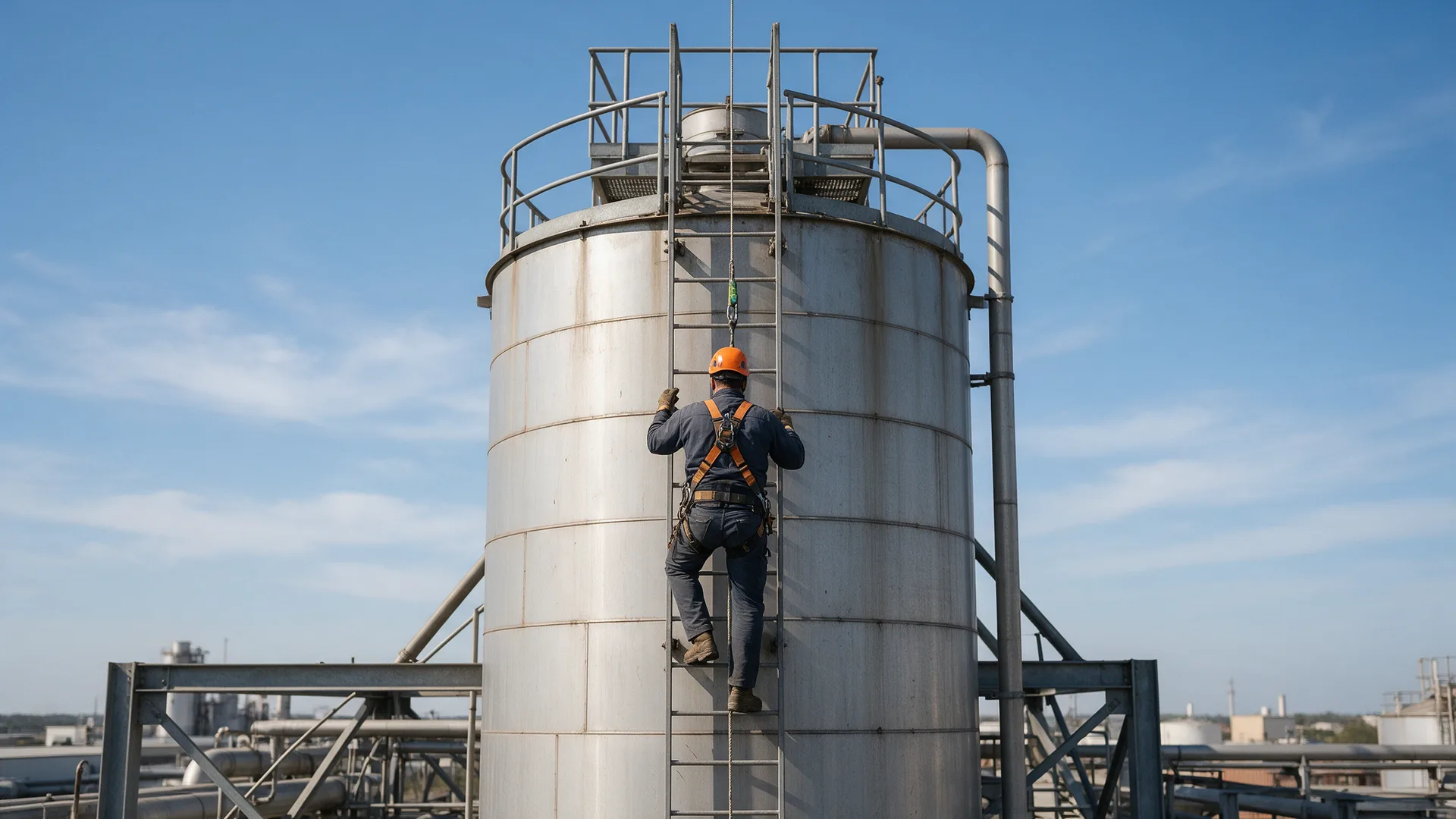
A vertical lifeline is a fall arrest system that protects a worker continuously while climbing up and down vertical structures such as fixed ladders, towers, poles, silos and façades. The system consists of an anchor point at the top, a line running vertically (a rail, steel wire rope or synthetic rope) and a fall arrester that moves with the worker along that line. Permanent installations use fixed systems with a rigid line (EN 353-1), while changing sites use mobile systems with a flexible rope (EN 353-2). Three things decide how safe it is: a strong top anchor, a correctly tensioned line and a compatible rope grab attached to the chest attachment point with a short connection.
What Is a Vertical Lifeline and Why Is It Needed?
The biggest risk in vertical work is being unprotected, even for a moment, while climbing or descending. Changing a lanyard connection every few metres is slow and prone to error. A vertical lifeline removes that problem: the worker connects to the line once and is protected all the way up.
Vertical lifelines are especially used on:
- Fixed ladders without a cage or other protection
- Telecom and power towers, lighting columns
- Silo, tank and chimney ladders
- Temporary vertical access during façade, scaffolding and site installations
- Wells, shafts and lift shafts
Fixed vs Mobile Vertical Lifeline: What Is the Difference?
A fixed vertical lifeline (EN 353-1) is a rigid rail or a steel wire rope tensioned at both ends, permanently installed on the structure; it suits frequently used ladders, towers and chimneys. A mobile vertical lifeline (EN 353-2) consists of a flexible rope attached to a top anchor and a rope grab that slides along it; it is preferred for temporary work and sites without a permanent system. The devices of the two systems are not interchangeable. We compare the systems in detail in our lifelines article. This article focuses on the mobile system, where most installation mistakes happen on site.
How to Install a Mobile Vertical Lifeline
The safety of a mobile vertical lifeline depends largely on correct installation. It should be installed by a trained, competent person in these steps:
- Choose the top anchor point. The anchor must be directly above the line of work, on a structural member that can carry the fall load. Use an EN 795 anchor eye or anchor sling. See our anchor point guide for anchor types.
- Choose the right rope. The rope must be of the diameter and type certified together with the rope grab you will use. A different rope can affect how the device locks.
- Get the rope length right. The rope must reach the lowest point of the work area. If the end of the rope finishes above the work zone, the device can come off the rope.
- Tension the line. Depending on the manufacturer’s instructions, attach a weight to the bottom of the rope or anchor it at the bottom. A slack rope swings in the wind and increases the fall distance.
- Protect the edges. Fit rope protectors where the rope passes over a sharp edge or corner.
- Check and record the installation. Before the line is used, check the anchor connection, rope and device, and record the installation.
Rules for Safe Use of a Vertical Lifeline
A correctly installed line cannot protect a worker who uses it incorrectly. Workers must follow these rules:
- Fit the rope grab the right way round. The arrow on the device must always point upwards; a device fitted upside down will not lock in a fall.
- Connect to the chest attachment point of the full body harness with the short connection specified by the manufacturer. Do not extend it with an extra lanyard.
- One person per line. Unless the manufacturer states otherwise, each vertical lifeline is for a single user.
- Have a rescue plan ready. A worker whose fall has been arrested is left suspended on the line and must be rescued quickly.
Device-specific rules, such as keeping the rope grab above you, not gripping it while climbing and the difference between automatic and manual devices, are covered in detail in our mobile fall arrester article.
Pre-Use Checklist
Before every climb, the worker should check:
- Are the top anchor connection and karabiner gate secure?
- Is there any cut, wear, crushing, melting or chemical damage on the rope?
- Is the rope taut, with the bottom end weighted or anchored?
- Does the rope grab’s locking mechanism work? Does it lock when pulled down sharply on the rope?
- Are the harness and connecting karabiner undamaged?
- Are the product labels readable and is the periodic inspection date valid?
In addition to these daily checks, every part of the system must be inspected by a competent person at least once a year. A rope and device that have arrested a fall must not be used again before they have been inspected.
Frequently Asked Questions
Is a vertical lifeline the same as a mobile fall arrester?
No. A mobile fall arrester (rope grab) is one part of a vertical lifeline system. The vertical lifeline is the whole system made up of the anchor, the rope or rail and the fall arrester.
How long can a vertical lifeline be?
The length depends on the limits specified by the manufacturer for the system. Mobile systems are usually made to the required length; what matters is that the rope reaches the bottom of the work zone and is correctly tensioned.
Is a vertical lifeline needed on a fixed ladder with a cage?
A ladder cage does not arrest a fall; it only limits how far a worker can move away from the ladder. On tall ladders, a vertical lifeline therefore provides more reliable fall protection than a cage.
Can two people work on the same vertical line?
Not unless the manufacturer has clearly approved it for multiple users. If more than one worker will climb at the same time, a separate line must be installed for each.
Can a rope grab be used with any rope?
No. A rope grab must only be used with rope of the diameter and type approved by the manufacturer. An incompatible rope can stop the device locking in a fall.
Continuous Protection Needs a Correctly Installed Line
A vertical lifeline is the silent protection behind every step on a ladder or tower. But that protection depends on a strong top anchor, a compatible rope and rope grab, a correctly tensioned line and a user who follows the rules.
EKS Work Safety offers complete solutions for vertical work, with mobile vertical lifeline kits made to the required length, rope grabs, anchors and harnesses. To find the right vertical lifeline system for your site, get in touch with EKS Work Safety.
For more, visit our LinkedIn page.

 by