
 English (UK)
  Türkçe
  العربية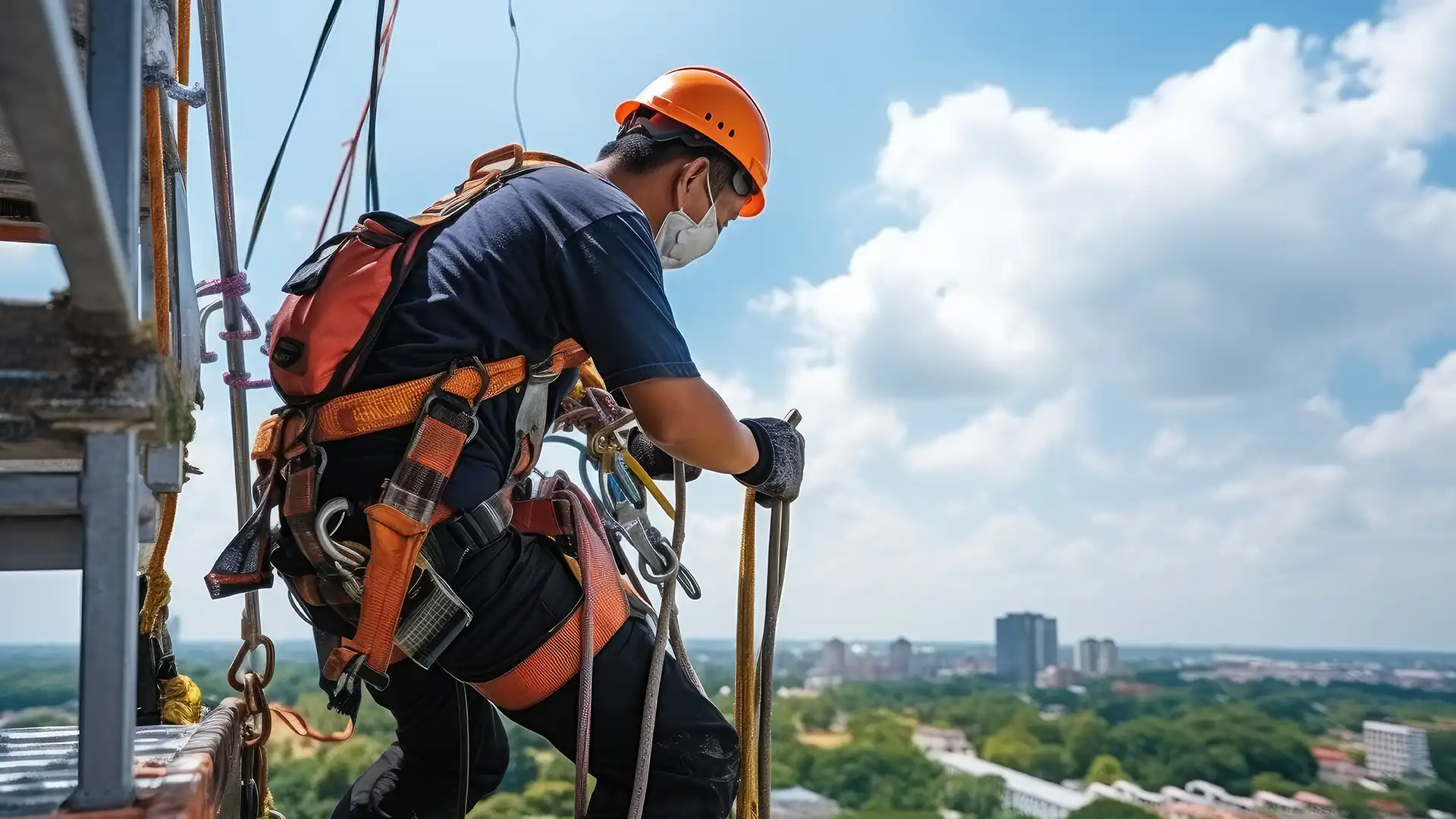
In work-at-height safety, the safety harness is one of the most critical pieces of equipment at the center of fall arrest systems. However, an issue that is frequently overlooked in the field is when a safety harness should be replaced and under which conditions it is no longer considered safe.
A safety harness that is not replaced on time or not properly inspected can increase risk instead of providing protection during a fall.
For this reason, the service life of the safety harness, periodic inspections, and replacement criteria must be clearly known.
Is There a Clear “Service Life” for a Safety Harness?
It is not accurate to define a single standard service life for safety harnesses. The service life varies depending on factors such as:
- Frequency of use
- Working environment
- Mechanical and environmental exposure
- Proper usage habits
Manufacturers generally specify a maximum service life. However, this does not mean that the harness can be safely used under all conditions. Real field conditions may cause this period to end much earlier.
In Which Situations Must a Safety Harness Be Replaced?
In some cases, the use of a safety harness must be discontinued immediately, regardless of its age.
The following situations are accepted as definite replacement criteria:
- The harness has been involved in a fall
- Stitching failure, fiber breakage, or visible wear
- Contact with chemical substances
- Excessive exposure to UV radiation, heat, or moisture
- Deformation or corrosion at metal connection points
A safety harness must not be reused after a fall without being inspected. This rule applies to all systems used together with the harness, including lanyards, energy absorbing lanyards, and retractable fall arrest devices.
Why Are Periodic Inspections Critical?
Over time, a safety harness may develop structural weaknesses that are not visible to the naked eye. For this reason, periodic inspections are not merely a formality but a fundamental part of safety.
During inspections, special attention should be paid to:
- Thinning or loosening in stitched areas
- Hardening of the webbing or fiber separation
- Integrity of carabiner connection points
- Proper functioning of adjustment buckles
These inspections reveal whether the safety harness works safely together with lanyards, anchors, and fall arrest systems.
Pre-Use Inspection Steps
Before each use, a short but conscious inspection should be carried out:
- Are there any cuts or wear on the webbing?
- Do the metal components function properly?
- Do the adjustments remain secure?
These simple steps can help prevent serious accidents on site.
What Happens If a Safety Harness Is Not Stored Properly?
One of the factors that determines the service life of a safety harness is storage conditions. A harness that is stored incorrectly can lose its safety performance even if it has never been used.
Risky storage conditions include:
- Direct sunlight
- Chemical vapors
- High humidity
- Contact with sharp surfaces
Safety harnesses should be stored together with lanyards, carabiners, and other work-at-height equipment in dry, clean, and protected areas.
Why Should Safety Harness Replacement Not Be Delayed?
One of the most common mistakes in the field is the “it hasn’t failed yet” mindset. However, the force generated during a fall is the first real test of a safety harness.
The consequences of delaying replacement include:
- Increased fall distance
- Increased force transferred to the body
- Risk of secondary impact and swinging
- Complete failure of the fall arrest system
For this reason, a safety harness should be replaced in any situation where there is doubt.
Ensure Continuous Safety with EKS Safety Harnesses
EKS İş Güvenliği approaches safety harnesses not only as a product but as a system component that ensures continuity in work-at-height safety. Solutions developed by considering field conditions, usage intensity, and system compatibility are designed to match real working scenarios.
To identify safety harness solutions suitable for your work environment and to bring safety under control, contact us.
Visit our LinkedIn to learn more.

 by
by